Excerpt: This post answers the questions “Which bridge is on Chenab River? What is the name of the bridge located over Chenab River? Which bridge is built on Chenab River?”
Nestled in the picturesque landscapes of northern India, a magnificent engineering marvel stands tall, bridging the gap between two towering mountains. This structure not only serves as a crucial transportation link but also symbolizes human ingenuity and determination. It is an awe-inspiring sight, showcasing the seamless blend of nature’s beauty and human-made innovation. This iconic structure, a bridge over a mighty river, has become a testament to modern engineering and a symbol of connectivity.
Which Bridge is on Chenab River?
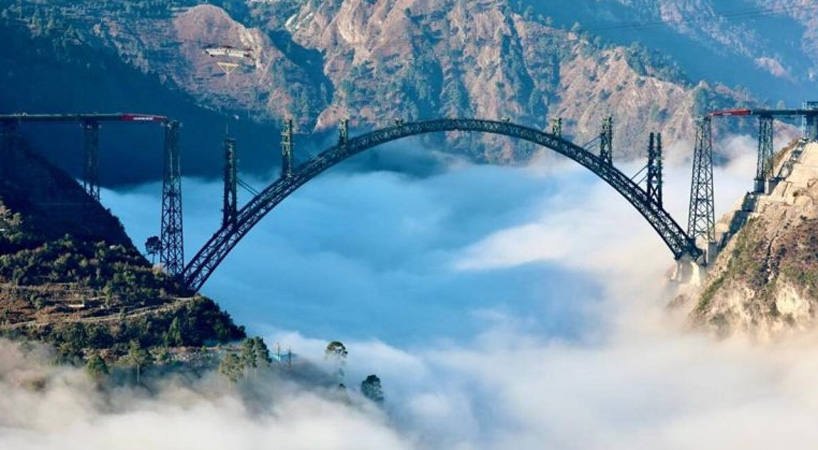
The famous bridge on the Chenab River is the Chenab Rail Bridge. This bridge is a remarkable feat of engineering and is considered one of the highest railway bridges in the world. It is a steel and concrete arch bridge that carries a single-track railway line, connecting the regions separated by the Chenab River. The bridge is located between the villages of Bakkal and Kauri in the Reasi district of the Jammu Division of Jammu and Kashmir, India.
The Chenab Rail Bridge is part of the ambitious Udhampur-Srinagar-Baramulla Rail Link (USBRL) project, which aims to provide seamless rail connectivity to the Kashmir Valley. The construction of the bridge was a significant challenge due to the difficult terrain, harsh weather conditions, and the sheer height of the structure. Despite these challenges, the bridge stands as a testament to human perseverance and engineering excellence.
Design and Construction
The design of the Chenab Rail Bridge is a combination of steel and concrete, featuring an impressive arch that spans the Chenab River. The bridge’s arch is made of steel, while the piers and foundations are constructed using concrete. The arch design was chosen for its ability to withstand the immense pressure exerted by the river and the wind loads at such a high altitude.
The total length of the Chenab Rail Bridge is approximately 1,315 meters (4,314 feet), with the main arch span measuring about 467 meters (1,532 feet). The bridge rises to a height of about 359 meters (1,178 feet) above the riverbed, making it one of the tallest railway bridges in the world. The bridge’s height is comparable to the height of the Eiffel Tower in Paris, showcasing the monumental scale of this engineering marvel.
The construction of the Chenab Rail Bridge involved several advanced engineering techniques and technologies. Specialized equipment and machinery were used to transport and assemble the steel components at such a great height. The construction process also required meticulous planning and coordination to ensure the safety and stability of the structure.
Importance and Significance
The Chenab Rail Bridge holds immense importance for several reasons. Firstly, it is a crucial part of the Udhampur-Srinagar-Baramulla Rail Link project, which aims to enhance rail connectivity to the Kashmir Valley. The bridge provides a vital link between the regions on either side of the Chenab River, facilitating the movement of people and goods. This improved connectivity is expected to boost economic development and tourism in the region, creating new opportunities for the local population.
Secondly, the Chenab Rail Bridge is an engineering marvel that showcases India’s capabilities in the field of infrastructure development. The successful completion of such a challenging project has earned recognition and accolades for Indian engineers and construction companies. The bridge has become a symbol of national pride and a testament to the country’s progress in modern engineering.
Thirdly, the bridge’s strategic location and design make it an important asset for the Indian Railways. The Chenab Rail Bridge is designed to withstand seismic activities, strong winds, and extreme weather conditions, ensuring its durability and safety. The bridge also features advanced monitoring systems that continuously assess its structural health, enabling timely maintenance and repairs.
Challenges Faced
The construction of the Chenab Rail Bridge was not without its challenges. The difficult terrain and remote location posed significant logistical challenges, making it difficult to transport materials and equipment to the construction site. The steep cliffs and deep gorges required the construction of access roads and temporary bridges to facilitate the movement of construction personnel and machinery.
Weather conditions in the region also presented challenges, with heavy rains, strong winds, and extreme temperatures affecting the construction process. The high altitude and rugged terrain required specialized safety measures and equipment to ensure the safety of the workers involved in the project.
Despite these challenges, the dedication and perseverance of the engineers, construction workers, and support staff made the successful completion of the Chenab Rail Bridge possible. The project stands as a testament to their hard work and commitment to overcoming obstacles and achieving excellence.
The Chenab Rail Bridge is a symbol of human ingenuity, determination, and engineering excellence. Located over the Chenab River between Bakkal and Kauri in the Reasi district of Jammu and Kashmir, this steel and concrete arch bridge is a crucial part of the Udhampur-Srinagar-Baramulla Rail Link project. The bridge’s impressive design and construction have earned it recognition as one of the highest railway bridges in the world, showcasing India’s capabilities in modern infrastructure development.
As a vital transportation link, the Chenab Rail Bridge is expected to enhance connectivity, boost economic development, and promote tourism in the region. Its strategic importance, combined with its engineering significance, makes it a remarkable achievement and a symbol of national pride. The Chenab Rail Bridge stands as a testament to the power of human innovation and the ability to overcome challenges, paving the way for future advancements in infrastructure and connectivity.
Source: To ensure the accuracy and authenticity of the information provided, the following sources were referenced:
- Chenab Rail Bridge – Wikipedia