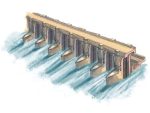
Excerpt: This post answers the questions “What is the difference between head and barrage? How to differentiate between a headworks and barrage? How a headworks and barrage works?”
Effective water management is crucial for ensuring a stable supply of water for agriculture, industry, and daily life. Various structures such as heads and barrages play a vital role in controlling and distributing water from rivers to the areas that need it the most. While both heads and barrages serve important functions, they have distinct characteristics and purposes. In this blog post, we will explore the differences between a head and a barrage, providing a clear understanding of each structure and its significance.
What is the difference between head and barrage?
Definition and Purpose
Head: A head, also known as a headwork or head regulator, is a structure built at the entrance of a canal or irrigation system to control the flow of water from a river. The primary purpose of a head is to regulate the water level and ensure a consistent supply of water for irrigation, drinking, and other uses. Heads are designed to manage the water intake into a canal, preventing excessive flow and maintaining the desired water level.
Barrage: A barrage is a structure built across a river or waterway to control the flow of water and divert it into canals or irrigation channels. Unlike heads, barrages are built directly on the river and do not create large reservoirs. The main function of a barrage is to regulate the water level in the river and ensure a stable supply of water for irrigation, flood control, and maintaining navigable waterways.
Construction and Design
Head: Heads are typically smaller structures compared to barrages and are often made of concrete or steel. They consist of gates or weirs that can be opened or closed to control the flow of water into a canal. The design of a head includes mechanisms to adjust the water level, ensuring a stable and controlled flow. Heads are usually located at the entrance of a canal or irrigation system, where they regulate the water intake.
Barrage: Barrages are larger structures built directly on rivers and are usually made of concrete or steel. They consist of multiple gates that can be raised or lowered to control the flow of water. Barrages are designed to regulate the water level in the river and divert water into canals or irrigation channels. The structure of a barrage includes several gates arranged across the width of the river, allowing for precise control of the water flow.
Water Flow and Control
Head: The primary function of a head is to control the water intake into a canal or irrigation system. By regulating the flow of water, heads ensure a consistent supply for agricultural and other uses. Heads prevent excessive water flow, which can cause flooding or damage to the canal system. They maintain the desired water level, ensuring efficient water distribution for irrigation and other purposes.
Barrage: Barrages regulate the flow of water in rivers and ensure a stable water supply for various uses. By controlling the water level, barrages help prevent flooding and maintain navigable waterways. Barrages divert water into canals and irrigation channels, supporting agricultural activities and providing water for drinking and industrial use. Unlike heads, barrages are built directly on rivers and do not create large reservoirs.
Examples
Head: Examples of heads include the Rohri Canal Head and the Dadu Canal Head in Pakistan. These structures regulate the water intake into the respective canals, ensuring a consistent supply for irrigation and other uses.
Barrage: Examples of barrages include the Farakka Barrage in India, the Kotri Barrage (Ghulam Muhammad Barrage) in Pakistan, and the Sardar Sarovar Barrage in India. These structures regulate the flow of water in rivers and distribute water for irrigation, flood control, and maintaining navigable waterways.
In conclusion, while both heads and barrages play important roles in water management, they have distinct characteristics and purposes. Heads, also known as headworks or head regulators, are smaller structures built at the entrance of canals to control the water intake and maintain a consistent water level. Barrages, on the other hand, are larger structures built directly on rivers to regulate the flow of water, prevent flooding, and divert water into canals for irrigation and other uses. Understanding the differences between heads and barrages helps us appreciate the significance of each structure in managing water resources and supporting the needs of communities and industries.