

Excerpt: This post answers the questions “Why K2 is called Godwin Austen Height/Peak? What is the other name of K2 Peak? What is K2 called?”
One of the world’s most renowned mountains, K2, stands as a symbol of nature’s grandeur and challenge. This majestic peak has captivated the hearts and minds of mountaineers and adventurers for centuries. The name “K2” is well-known, but there is another name associated with this formidable mountain: Godwin Austen Height Peak. The history behind this name is intriguing and pays homage to an individual who played a significant role in the exploration of the region.
Why K2 is Called Godwin Austen Height/Peak?
K2, the second-highest mountain in the world, is part of the Karakoram Range and stands at an impressive 8,611 meters (28,251 feet) above sea level. While the name “K2” is widely recognized, the mountain is also referred to as Godwin Austen Height Peak. This name is derived from Colonel Henry Haversham Godwin-Austen, a British surveyor, geologist, and mountaineer who made significant contributions to the exploration and mapping of the Karakoram Range in the 19th century.
During the Great Trigonometric Survey of India, which aimed to map and measure the Indian subcontinent, Colonel Godwin-Austen conducted extensive surveys of the region. His work included detailed mapping of the Karakoram Range, and he played a crucial role in documenting the geography and geology of the area. As a result of his contributions, the mountain was named in his honor.
The name “Godwin Austen Height Peak” serves as a tribute to Colonel Godwin-Austen’s dedication and achievements in the field of exploration. It reflects the recognition of his efforts in uncovering the mysteries of the Karakoram Range and providing valuable information about one of the most remote and challenging regions on Earth.
Who Was Godwin Austen?
Colonel Henry Haversham Godwin-Austen was born on July 6, 1834, in Teignmouth, Devon, England. He was an accomplished surveyor, geologist, and mountaineer who made significant contributions to the exploration of the Himalayas and the Karakoram Range. Godwin-Austen was a key figure in the Great Trigonometric Survey of India, a monumental project that aimed to map the Indian subcontinent with precision and accuracy.
Godwin-Austen’s fascination with the mountains began at an early age, and he pursued a career in the British Indian Army’s Survey of India. He quickly gained a reputation for his meticulous surveying skills and his ability to navigate challenging terrains. His work in the Karakoram Range, in particular, earned him widespread recognition.
One of Godwin-Austen’s most notable achievements was his exploration and mapping of the Baltoro Glacier, one of the largest glaciers outside the polar regions. His detailed surveys of the glacier and the surrounding peaks provided valuable insights into the geography and geology of the region. Godwin-Austen’s work laid the foundation for future exploration and mountaineering expeditions in the Karakoram Range.
In addition to his surveying work, Godwin-Austen was also an accomplished geologist. He conducted extensive geological studies of the regions he explored, documenting the rock formations, mineral deposits, and geological structures. His contributions to the field of geology were recognized by his peers, and he received several accolades for his work.
Colonel Godwin-Austen’s legacy lives on through the naming of K2 as Godwin Austen Height Peak. His dedication to exploration and his contributions to the understanding of the Karakoram Range have left an indelible mark on the history of mountaineering and geology.
K2: The Majestic Peak
Overview
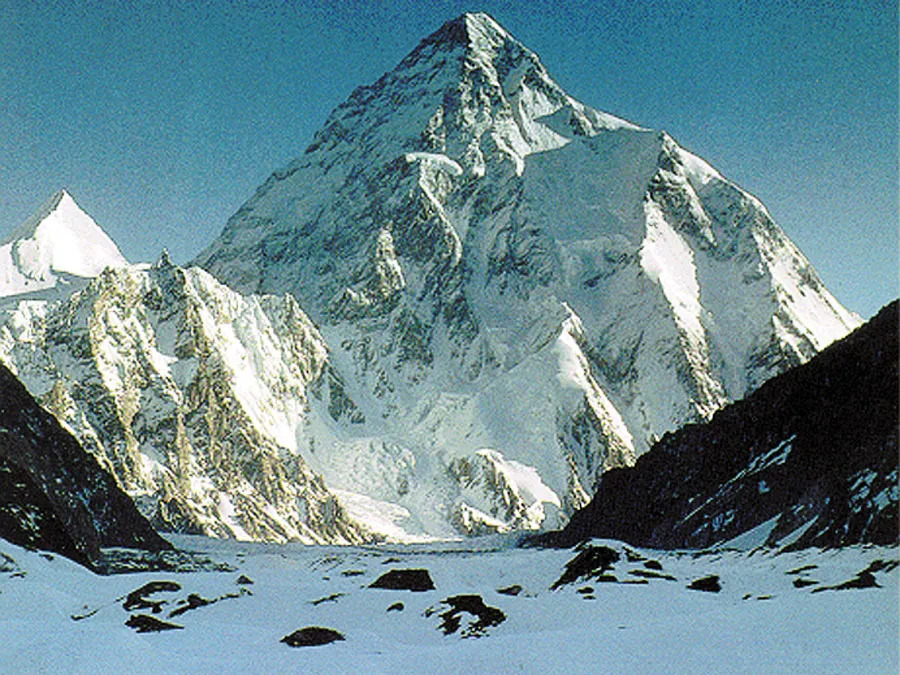
K2, also known as Mount Godwin-Austen, is the second-highest mountain in the world, with an elevation of 8,611 meters (28,251 feet) above sea level. It is located in the Karakoram Range, which spans the borders of Pakistan, India, and China. K2 is renowned for its steep and challenging ascent, making it one of the most difficult and dangerous mountains to climb.
Geographical Features
K2 is characterized by its rugged terrain, steep slopes, and treacherous weather conditions. The mountain’s pyramid-shaped peak rises dramatically above the surrounding landscape, creating a breathtaking and awe-inspiring sight. The Karakoram Range, which includes K2, is known for its extensive glaciation, with numerous glaciers flowing down the slopes of the mountains.
Climbing History
K2’s challenging ascent has earned it the nickname “Savage Mountain.” The first successful ascent of K2 was achieved by an Italian expedition led by Ardito Desio in 1954. Lino Lacedelli and Achille Compagnoni were the first climbers to reach the summit on July 31, 1954. Since then, many climbers have attempted to conquer K2, but its treacherous conditions have resulted in numerous fatalities.
Ecological Significance
The region surrounding K2 is home to a diverse range of flora and fauna, adapted to the harsh mountain environment. The high-altitude ecosystems support unique plant species and provide habitat for wildlife such as snow leopards, Himalayan ibex, and Marco Polo sheep. The glaciers of the Karakoram Range also play a crucial role in the hydrology of the region, feeding into major rivers such as the Indus River.
Cultural Importance
K2 holds cultural and spiritual significance for the local communities living in the Karakoram region. The mountain is often considered sacred, and its imposing presence has inspired legends and myths. The indigenous people have a deep connection to the mountains, and their traditions, customs, and way of life are closely tied to the natural landscape.
In conclusion, K2, also known as Godwin Austen Height Peak, stands as a testament to the indomitable spirit of exploration and the enduring legacy of Colonel Henry Haversham Godwin-Austen. The mountain’s name pays homage to the contributions of a remarkable individual who dedicated his life to uncovering the mysteries of the Karakoram Range. Understanding and appreciating the history and significance of K2 enhances our knowledge of the Earth’s geological wonders and underscores the importance of preserving these magnificent environments for future generations.
Sources: To ensure the accuracy and authenticity of the information provided, the following sources were referenced:
- K2: The Savage Mountain – National Geographic.
- The Karakoram Range – Encyclopedia Britannica.
- Mountaineering in the Karakoram – Alpine Club of Pakistan.
- The Karakoram Highway – Lonely Planet.
- K2 Mountain – Wikipedia

