

Excerpt: This post answers the questions “Who was the second Prime Minister of Pakistan? What is the name of the second P M of Pakistan? Who became Prime Minister of Pakistan after the assassination of Liaquat Ali Khan?”
Soon after independence, Pakistan was a British dominion state until the adoption of the constitution. During this period, it was ruled by a Governor-General who acted as the representative of the British monarch, Queen Elizabeth II. The first Governor-General of Pakistan was Muhammad Ali Jinnah, the founder of Pakistan. He remained in office from 14 August 1947 to 11 September 1948. During his rule, Liaquat Ali Khan was the Prime Minister of Pakistan. After the demise of Muhammad Ali Jinnah, Khwaja Nizamuddin was appointed as the new Governor-General of Pakistan.
Who was the second Prime Minister of Pakistan?
After independence, Liaquat Ali Khan worked as the first Prime Minister with Muhammad Ali Jinnah, the first Governor-General of Pakistan. He remained in office from 15 August 1947 to 16 October 1951, the day he was assassinated.
After the assassination of Liaquat Ali Khan, Khwaja Nazimuddin became the second Prime Minister of Pakistan. He took charge of the Prime Minister’s Office on 17 October 1951 and remained in office until 17 April 1953.
Who was Khwaja Nizamud Din?
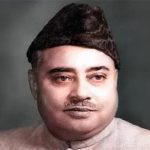
Born in July 1894, Sir Khwaja Nizamuddin was a staunch supporter of the Pakistan Movement. He was one of the Bengali principal leaders in the Muslim League and a close associate of Muhammad Ali Jinnah. He served as the Prime Minister of Bengal from 1943 to 1945 in British India.
After independence, he became the Governor-General of Pakistan in 1948, after the demise of Muhammad Ali Jinnah. Later, he became the Prime Minister in 1951, after the assassination of Liaquat Ali Khan.
Why Khwaja Nizam ud Din preferred the office of Prime Minister over Governor General?
During Jinnah’s tenure, the office of Governor-General was the center of all powers. After his demise, a shift occurred, and the Prime Minister’s Office became the center of power. This was because Liaquat Ali Khan, then Prime Minister of Pakistan, was the leading figure after Muhammad Ali Jinnah and one of the most prominent founding fathers of the country.
After the assassination of Liaquat Ali Khan in 1951, Khwaja Nizamuddin became Prime Minister in hope of having more powers, but a shift in power occurred again. In short, his term was marked by constant power struggles with his own successor.
Death and Burial
The new Governor-General, Ghulam Muhammad, dismissed Nizamuddin on 17 April 1953. Later, he took retirement from national politics. He died in 1964 after a brief illness. He is buried at the Mausoleum of Three Leaders in Dhaka.
The legacy of Khwaja Nizamuddin, as the second Prime Minister of Pakistan, is a significant chapter in the nation’s history. His contributions during the formative years of Pakistan, both as Governor-General and Prime Minister, highlight the complexities and challenges faced by the newly independent state. By understanding the roles and achievements of leaders like Nizamuddin, we gain a deeper appreciation for the political evolution of Pakistan. The dedication and service of such leaders continue to inspire and shape the future of the country.
Source: The above answer is based on information from
- Cabinet Division of Pakistan, List of Prime Ministers
- Wikipedia, Khwaja Nizamuddin
- Britannica, Khwaja Nizamud Din | Prime Minister of Pakistan


Pingback: Who was the first president of Pakistan? | FA Ques – Simple Answers