Excerpt: This post answers the questions “Which province in Pakistan is the most mountainous? Which province in Pakistan has the greatest number of mountains? Which province of Pakistan has most mountains? Which province of Pakistan has most mountainous area?”
Pakistan is a country blessed with diverse landscapes, ranging from vast deserts to lush forests and majestic mountains. The mountainous regions of Pakistan are not only a source of natural beauty but also hold significant importance for the environment, economy, and culture of the country. Among the provinces of Pakistan, one stands out as having the greatest number of mountains, attracting adventurers, nature enthusiasts, and researchers alike.
Which Province in Pakistan Has the Greatest Number of Mountains?
The province of Pakistan with the greatest number of mountains is Gilgit-Baltistan. Located in the northern part of the country, Gilgit-Baltistan is home to some of the most spectacular mountain ranges in Pakistan. The mountainous terrain of Gilgit-Baltistan includes the famous Karakoram, the western Himalayas, and parts of the Hindu Kush, making it a paradise for mountaineers and trekkers.
Gilgit-Baltistan is known for its rugged landscape, with towering peaks, deep valleys, and extensive glaciation. Some of the highest peaks in Pakistan are located in this province, including K2, which stands at an impressive 8,611 meters (28,251 feet) and is the second-highest peak in the world. Other notable peaks in Gilgit-Baltistan include Nanga Parbat, Gasherbrum I and II, Broad Peak, and Masherbrum.
The mountains of Gilgit-Baltistan are not only known for their height but also for their unique geological features and diverse ecosystems. The region is characterized by its varied topography, which includes alpine meadows, dense forests, and barren rocky landscapes. This diversity of habitats supports a wide range of plant and animal species, many of which are endemic to the region.
In addition to their natural beauty, the mountains of Gilgit-Baltistan have a significant impact on the climate and hydrology of the region. The high peaks act as barriers to the monsoon winds, causing heavy rainfall on their southern slopes while creating a rain shadow effect on the northern side. The numerous glaciers in these mountains feed into major rivers, including the Indus River, which provides essential water resources for agriculture, drinking water, and hydroelectric power generation.
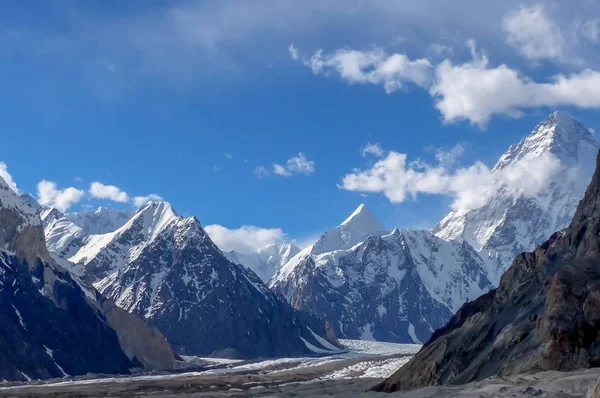
The Mountains of Gilgit-Baltistan: An Overview
Karakoram Range
The Karakoram Range is one of the most prominent mountain ranges in Gilgit-Baltistan. It stretches for about 500 kilometers and is home to some of the world’s highest peaks. K2, the second-highest peak on Earth, is located in this range and is a popular destination for mountaineers. The range is known for its extensive glaciation, with glaciers such as the Siachen Glacier, Baltoro Glacier, and Biafo Glacier playing a crucial role in the region’s hydrology.
Western Himalayas
The westernmost part of the Himalayas, known as the Western Himalayas, extends into Gilgit-Baltistan. This region includes the famous Nanga Parbat massif, with Nanga Parbat itself reaching a height of 8,126 meters (26,660 feet). The Himalayas are characterized by their geological complexity and diverse ecosystems, ranging from tropical forests to alpine meadows. The range is home to a variety of flora and fauna, including endangered species such as the snow leopard and Himalayan brown bear.
Hindu Kush Range
The Hindu Kush range, which extends into the Gilgit-Baltistan region, is known for its steep and rugged terrain. The range includes peaks such as Tirich Mir, which stands at an impressive 7,708 meters (25,289 feet). The Hindu Kush range is characterized by its diverse topography, with deep valleys, rocky landscapes, and alpine meadows supporting a wide range of plant and animal life.
Ecological Significance
The mountains of Gilgit-Baltistan play a crucial role in the region’s ecology. The diverse habitats support a wide range of plant and animal species, many of which are adapted to the harsh mountain environment. The forests of the region are home to a variety of tree species, including pine, cedar, and fir, which provide habitat for numerous wildlife species. The alpine meadows, with their vibrant wildflowers and grasses, support grazing animals such as the Marco Polo sheep and Himalayan ibex.
The mountains also play a vital role in regulating the region’s climate and water resources. The high peaks act as natural barriers, influencing weather patterns and precipitation. The glaciers and snowfields of the mountains store vast amounts of freshwater, which is gradually released during the warmer months, providing a steady flow of water to the rivers and streams of the region.
In conclusion, Gilgit-Baltistan stands out as the province with the greatest number of mountains in Pakistan. Its diverse and rugged landscape, with towering peaks, deep valleys, and extensive glaciation, makes it a significant natural wonder. The mountains of Gilgit-Baltistan not only offer breathtaking beauty and adventure but also play a crucial role in the region’s ecology, climate, and water resources. Understanding and appreciating these mountainous regions enhances our knowledge of the Earth’s geological history and underscores the importance of preserving these magnificent environments for future generations.
Sources: To ensure the accuracy and authenticity of the information provided, the following sources were referenced:
- List of Mountains in Pakistan – Wikipedia
- Landscape of Pakistan – Pakistan Embassy Copenhagen
- Pakistan | Himalayas, Karakoram, Indus – Britannica
- Concordia Expeditions