Excerpt: The post answers the questions “How long is the Karakoram Range? What is the length of Karakoram Range? What is the size of Karakoram Range?”
Amidst the high altitudes and snowy expanses of Central Asia lies a mountain range that has captivated the imagination of explorers, adventurers, and geologists for centuries. Its peaks are among the tallest in the world, and its glaciers are a sight to behold. But just how extensive is this formidable mountain range? Let’s delve into the incredible length of this natural wonder and explore its unique features.
How Long is the Karakoram Range?
What is the total length of the Karakoram Range?
The Karakoram Range stretches for approximately 500 kilometers (around 310 miles) in length. This awe-inspiring range spans across three countries: Pakistan, India, and China. The range is located in the northern regions of Pakistan and India and extends into the southwestern part of China. The Karakoram is one of the most significant mountain ranges in the world, known for its towering peaks, extensive glaciers, and rugged terrain.
To give you a sense of its size, the Karakoram Range is roughly equivalent in length to the distance between New York City and Washington, D.C. This vast expanse of mountainous terrain is home to some of the highest peaks on the planet, including K2, the second-highest mountain in the world.
The Karakoram Range
Geographic Location and Extent
The Karakoram Range is situated in the northernmost part of the Indian subcontinent and serves as a natural boundary between the regions of Gilgit-Baltistan (Pakistan), Ladakh (India), and the Xinjiang Uyghur Autonomous Region (China). It is part of the larger Himalayan mountain system and is often considered one of the most rugged and inaccessible mountain ranges globally.
The range’s geographic location is marked by its proximity to several other significant mountain ranges, including the Himalayas to the south, the Pamirs to the west, and the Kunlun Mountains to the north. The Karakoram is also home to the famous Karakoram Highway, one of the highest paved international roads in the world, connecting Pakistan and China.
Notable Peaks and Glaciers
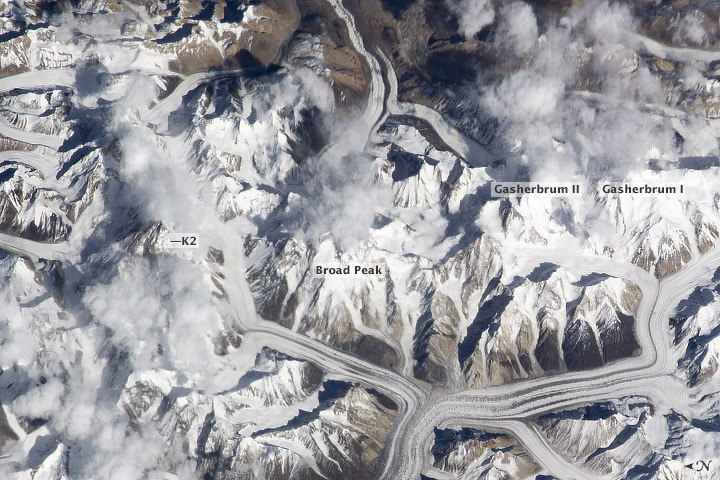
The Karakoram Range is renowned for its impressive peaks, with four of the world’s fourteen eight-thousanders (mountains over 8,000 meters) located within its boundaries. These peaks include:
- K2 (Mount Godwin-Austen): At 8,611 meters (28,251 feet), K2 is the second-highest mountain in the world, after Mount Everest. It is known for its challenging climbing conditions and has earned the nickname “Savage Mountain” due to the high fatality rate among climbers.
- Gasherbrum I (Hidden Peak): Standing at 8,080 meters (26,509 feet), Gasherbrum I is the eleventh-highest peak in the world. It is part of the Gasherbrum massif, which includes several other notable peaks.
- Broad Peak: At 8,051 meters (26,414 feet), Broad Peak is the twelfth-highest mountain globally. It is named for its extensive summit ridge, which spans over 1.5 kilometers in length.
- Gasherbrum II: With an elevation of 8,035 meters (26,362 feet), Gasherbrum II is the thirteenth-highest peak in the world. It is one of the most frequently climbed eight-thousanders in the Karakoram.
In addition to its towering peaks, the Karakoram Range is home to some of the largest glaciers outside the polar regions. The Siachen Glacier, at approximately 76 kilometers (47 miles) long, is one of the longest glaciers in the world. Other notable glaciers include the Baltoro Glacier, the Biafo Glacier, and the Hispar Glacier.
Climatic Conditions and Biodiversity
The climatic conditions in the Karakoram Range vary significantly based on altitude and location. The lower regions experience a semi-arid climate with hot summers and cold winters, while the higher altitudes have an alpine climate characterized by extreme cold, heavy snowfall, and high winds.
Despite its harsh conditions, the Karakoram Range supports a diverse range of flora and fauna. The lower slopes are covered in sparse vegetation, including shrubs, grasses, and hardy alpine plants. The region is also home to several endangered species, such as the snow leopard, the Himalayan brown bear, and the ibex. The range’s glaciers and rivers provide essential freshwater resources for the surrounding areas.
Cultural and Historical Significance
The Karakoram Range holds significant cultural and historical importance for the communities living in the region. The mountains have served as a natural barrier and a conduit for trade and cultural exchange for centuries. The ancient Silk Road, a network of trade routes connecting the East and the West, passed through the Karakoram, facilitating the exchange of goods, ideas, and cultural practices.
The Karakoram is also home to several indigenous communities with rich cultural traditions and unique ways of life. These communities have adapted to the harsh mountainous environment and continue to rely on traditional practices such as subsistence farming, herding, and craftsmanship.
Mountaineering and Adventure Tourism
The Karakoram Range has long been a destination for mountaineers and adventure enthusiasts from around the world. The region offers unparalleled opportunities for trekking, climbing, and exploring some of the most challenging and breathtaking terrains on Earth. The allure of summiting peaks like K2 and Broad Peak has drawn climbers seeking to test their limits and achieve remarkable feats.
Trekking routes such as the Baltoro Glacier trek and the K2 Base Camp trek attract thousands of adventurers every year, offering stunning views of the Karakoram’s majestic peaks and glaciers. The region’s remote and rugged landscape provides a sense of solitude and connection with nature that is hard to find elsewhere.
In conclusion, the Karakoram Range stands as one of the most extensive and awe-inspiring mountain ranges in the world, stretching approximately 500 kilometers in length. Its towering peaks, vast glaciers, and rugged terrain make it a region of immense geographical and cultural significance. From the formidable challenge of climbing K2 to the serene beauty of its glaciers, the Karakoram Range continues to captivate and inspire all who encounter its majestic presence. Whether you’re an adventurer seeking new heights or someone who simply appreciates the wonders of nature, the Karakoram Range offers a unique and unforgettable experience.
Source: To ensure the accuracy and authenticity of the information provided, the following sources were referenced:
- Pakistan – Himalayas, Karakoram, Indus – Britannica
- Karakoram – Wikipedia
- Karakoram Mountains – World Atlas