
Excerpt: This post answers the questions “How long is the Himalaya Range? What is the length of Himalaya Range?”
In the world of majestic mountain ranges, one particular range stands out as a symbol of natural beauty, cultural significance, and geographical grandeur. It spans multiple countries and offers a stunning backdrop to some of the world’s most iconic landscapes. But just how extensive is this magnificent mountain range? Let’s explore the remarkable length and the unique features of this awe-inspiring natural wonder.
How Long is the Himalaya Range?
What is the total length of the Himalaya range?
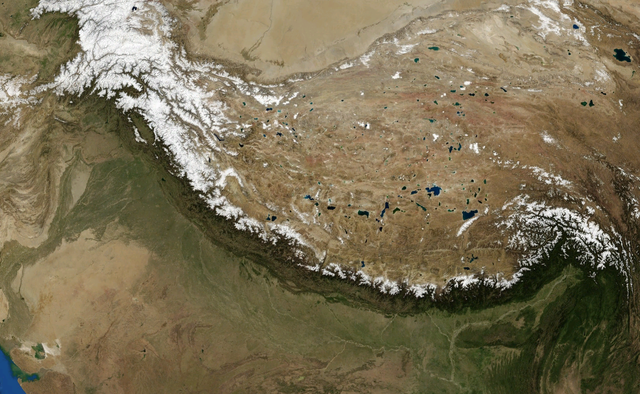
The Himalaya Range, often simply referred to as the Himalayas, stretches for an impressive length of approximately 2,400 kilometers (1,500 miles). This vast expanse runs from the northernmost regions of Pakistan in the west to the northeastern parts of India, Bhutan, and China in the east. The range also forms the northern boundary of Nepal and the southern edge of the Tibetan Plateau. From space it looks like a long arc that runs northwest to southeast.
To put its length into perspective, if you were to travel the entire length of the Himalayas, it would be equivalent to journeying from New York City to Miami in the United States. The sheer size of the Himalayas makes it one of the most extensive and diverse mountain ranges in the world, encompassing a wide range of ecosystems, climates, and cultures.
The Himalaya Range
Geographic Location and Extent
The Himalaya Range is situated in South Asia and serves as a natural barrier between the Indian subcontinent and the Tibetan Plateau. Its geographic location has played a crucial role in shaping the climate and culture of the surrounding regions. The range spans across five countries: Pakistan, India, Nepal, Bhutan, and China (Tibet).
The westernmost point of the Himalayas is in the Nanga Parbat region of Pakistan, while the easternmost point is near the Namcha Barwa peak in the Tibet Autonomous Region of China. Along its length, the range features several of the world’s highest peaks, including Mount Everest, the highest point on Earth.
The Great Himalayas, Lesser Himalayas, and Outer Himalayas
The Himalaya Range can be divided into three main sub-ranges: the Great Himalayas, the Lesser Himalayas, and the Outer Himalayas.
- The Great Himalayas: Also known as the Higher Himalayas, this sub-range features the highest and most prominent peaks, including Mount Everest, K2, Kangchenjunga, Lhotse, and Makalu. The Great Himalayas are characterized by their towering heights, glaciated valleys, and extreme weather conditions.
- The Lesser Himalayas: Also called the Middle Himalayas, this sub-range lies to the south of the Great Himalayas. It includes peaks that are lower in elevation but still significant, such as Nanda Devi and the Pir Panjal Range. The Lesser Himalayas are known for their lush forests, scenic valleys, and diverse wildlife.
- The Outer Himalayas: Also referred to as the Shivalik Hills, this sub-range forms the southernmost foothills of the Himalayas. The Outer Himalayas are characterized by their gentle slopes, fertile plains, and subtropical forests. They serve as a transition zone between the plains of India and the higher ranges.
Climatic Conditions and Biodiversity
The climatic conditions in the Himalayas vary significantly based on altitude and location. The lower regions experience a subtropical climate with hot summers and mild winters, while the higher altitudes have a harsh, alpine climate with cold temperatures and heavy snowfall.
The Himalayas are home to a remarkable diversity of flora and fauna. The range’s varied ecosystems include subtropical forests, temperate forests, alpine meadows, and high-altitude deserts. The region is inhabited by numerous species of plants and animals, including several endangered species such as the snow leopard, the red panda, and the Himalayan monal.
Cultural and Historical Significance
The Himalayas hold profound cultural and historical significance for the people living in the region. The mountains are revered in Hinduism, Buddhism, and other religions, with many sacred sites and pilgrimage destinations located throughout the range. Mount Kailash, in Tibet, is considered a holy mountain by Hindus, Buddhists, Jains, and Bon practitioners.
Throughout history, the Himalayas have served as a natural barrier and a crossroads for trade and cultural exchange. The Silk Road, an ancient trade route, passed through the region, facilitating the exchange of goods, ideas, and cultural practices between the East and the West.
Mountaineering and Adventure Tourism
The Himalayas have long been a magnet for mountaineers and adventure enthusiasts from around the world. The region offers unparalleled opportunities for trekking, climbing, and exploring some of the most challenging and breathtaking terrains on Earth. Iconic trekking routes, such as the Everest Base Camp trek and the Annapurna Circuit, attract thousands of adventurers every year.
The first successful ascent of Mount Everest by Sir Edmund Hillary and Tenzing Norgay in 1953 remains one of the most celebrated achievements in mountaineering history. Since then, the Himalayas have continued to inspire and challenge climbers, with numerous expeditions attempting to conquer its formidable peaks.
In conclusion, the Himalaya Range stands as a testament to the Earth’s geological grandeur and natural beauty. Spanning approximately 2,400 kilometers, it is one of the longest and most diverse mountain ranges in the world. The Himalayas are not only a haven for adventure seekers but also a region of immense cultural, historical, and ecological significance. From the towering peaks of the Great Himalayas to the lush valleys of the Outer Himalayas, this magnificent range continues to captivate and inspire all who encounter its majestic presence.
Source: To ensure the accuracy and authenticity of the information provided, the following sources were referenced:
- Himalayas | Definition, Location, History, Countries – Britannica
- Himalayas – Wikipedia
- Pakistan – Himalayas, Karakoram, Indus – Britannica

