
Excerpt: This post answers the questions “Why K2 is called Godwin Austen Peak? What is the second name of K2 Peak?”
In the realm of mountaineering and adventure, there exists a peak that has captured the imagination of explorers, climbers, and geographers alike. This mountain, with its towering height and formidable reputation, stands as one of the most challenging and awe-inspiring summits in the world. Known for its treacherous terrain and majestic beauty, this peak has a name that resonates with both historical significance and geographical prominence. In this blog post, we will explore why this iconic peak is called Godwin Austen Peak, delve into the life of the man behind the name, and uncover the meaning of its more commonly known designation, K2.
Why is it Called Godwin Austen Peak?
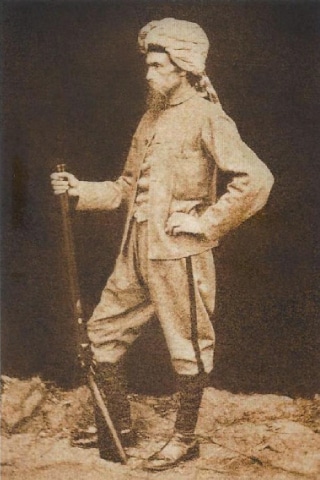
K2, the second-highest mountain in the world, is also known as Godwin Austen Peak. The name “Godwin Austen” pays tribute to Henry Haversham Godwin-Austen, a British geographer, topographer, and surveyor who made significant contributions to the mapping and exploration of the Karakoram region. Although he was not the first to discover K2, his detailed surveys and documentation of the surrounding area played a crucial role in bringing the mountain to the attention of the wider world.
Godwin-Austen’s work in the region during the late 19th century provided valuable insights into the geography, geology, and natural history of the Karakoram range. As a mark of recognition for his efforts, the peak was named after him by the surveyors and explorers who followed in his footsteps. The name “Godwin Austen Peak” serves as a lasting tribute to his legacy and the contributions he made to the field of exploration and cartography.
Who Was Godwin Austen?
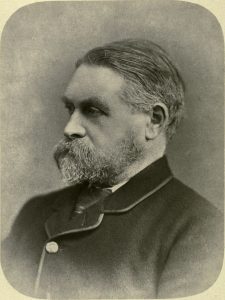
Henry Haversham Godwin-Austen was born on July 6, 1834, in Teignmouth, Devon, England. He was the son of Robert Alfred Cloyne Godwin-Austen, a prominent geologist. Inspired by his father’s work, Godwin-Austen developed a keen interest in geography and natural sciences from a young age. He pursued his education at the Royal Military College, Sandhurst, and later joined the British Army’s Bengal Engineers.
Godwin-Austen’s military career took him to India, where he became involved in the Great Trigonometrical Survey of India—a monumental project aimed at mapping the subcontinent’s vast and diverse landscapes. His exceptional skills as a surveyor and cartographer soon earned him a reputation for accuracy and meticulousness.
In the 1860s, Godwin-Austen was assigned to survey the remote and rugged regions of the Karakoram Range. During his expeditions, he meticulously documented the topography, geology, and natural history of the area. His surveys provided the first detailed maps of the Karakoram, including the region surrounding K2. Godwin-Austen’s work was instrumental in advancing the understanding of the region’s geography and paved the way for future explorations.
Throughout his career, Godwin-Austen received numerous accolades for his contributions to geography and exploration. He was a fellow of the Royal Geographical Society and was awarded the Society’s Founder’s Gold Medal in recognition of his achievements. Godwin-Austen’s legacy lives on through the enduring name of Godwin Austen Peak, a testament to his dedication and pioneering spirit.
What K2 Means?
K2, the more commonly known name for the mountain, holds its own unique significance. The designation “K2” originated from the Great Trigonometrical Survey of India, led by British surveyor Thomas Montgomerie in the mid-19th century. As part of the survey, Montgomerie identified and cataloged several prominent peaks in the Karakoram range, assigning them temporary names based on their sequential order of identification.
The letter “K” was used to denote the Karakoram range, and the peaks were numbered sequentially. Thus, the peak that we now know as K2 was simply the second peak identified in the range, leading to its designation as “K2.” Interestingly, while many of the other peaks in the survey were later given local names, K2 retained its numerical designation, which has since become iconic in the world of mountaineering.
K2 is also known by other names in different languages and cultures. In the local Balti language, the mountain is called “Chogori,” which means “Big Mountain.” This name reflects the awe and reverence with which the local communities view the towering peak. Despite the various names it is known by, K2 remains a symbol of adventure, challenge, and the indomitable human spirit.
K2, or Godwin Austen Peak, stands as a towering testament to the spirit of exploration and the legacy of those who have ventured into the unknown. The mountain’s dual names—K2 and Godwin Austen—each tell a story of discovery, dedication, and the pursuit of knowledge. While K2’s numerical designation highlights its place in the annals of geographical exploration, the name Godwin Austen serves as a tribute to the pioneering efforts of Henry Haversham Godwin-Austen. As climbers and adventurers continue to be drawn to its formidable heights, K2 remains a symbol of the enduring allure and challenge of the natural world.
Source: To ensure the accuracy and authenticity of the information provided, the following sources were referenced:
- K2, or Mount Godwin Austen – Kids Britannica
- K2 – Wikipedia