Excerpt: This post answers the questions “Who was the first Muslim army chief of Pakistan? What is the name of first Muslim army chief of Pakistan? Who was Pakistan’s army first Muslim chief?”
The history of Pakistan’s military leadership is marked by significant milestones and influential figures. The first Muslim army chief of Pakistan played a crucial role in shaping the country’s military and political landscape. In this blog post, we will explore the identity of this notable figure, his contributions, and the broader context of Pakistan Army Chiefs and their political roles.
Who was the first Muslim army chief of Pakistan?
The first Muslim army chief of Pakistan was General Muhammad Ayub Khan. He was appointed as the Commander-in-Chief of the Pakistan Army on January 17, 1951. His leadership marked a pivotal moment in Pakistan’s military history, as he was the first native Pakistani to hold this position, succeeding the British officers who initially led the army.
The First Native Pakistani Army Chief of Pakistan
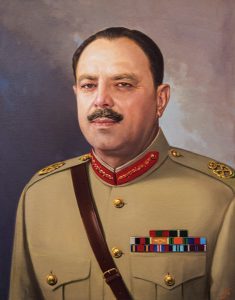
General Muhammad Ayub Khan was a pivotal figure in Pakistan’s military history. Born on May 14, 1907, in Rehana, North-West Frontier Province (now Khyber Pakhtunkhwa), he joined the British Indian Army in 1928 and served with distinction during World War II. After the partition of India in 1947, he chose to join the Pakistan Army.
On January 17, 1951, Ayub Khan was appointed as the first native Pakistani Commander-in-Chief of the Pakistan Army, succeeding British officers. His leadership was instrumental in modernizing the army and implementing various reforms to enhance its operational capabilities. He played a significant role in maintaining law and order and strengthening Pakistan’s defense infrastructure.
Ayub Khan’s tenure as Commander-in-Chief lasted until October 27, 1958, after which he became the President of Pakistan. His presidency was marked by efforts to stabilize the country and promote economic development. He introduced the concept of “Basic Democracy” and held a referendum in 1960 to legitimize his rule.
General Ayub Khan’s legacy is a blend of military leadership and political influence, shaping the early years of Pakistan’s history. He passed away on April 19, 1974, leaving behind a significant impact on the nation’s military and political landscape.
The Pakistan Army Chiefs and Their Political Role
The Early Years: Transition from British to Pakistani Leadership
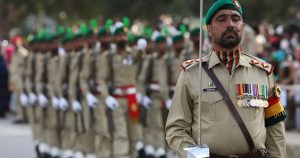
After the partition of India in 1947, the newly formed Pakistan inherited the British Indian Army. Initially, the top military positions were held by British officers, with General Frank Messervy being the first Commander-in-Chief of the Pakistan Army. However, the transition to native Pakistani leadership began with the appointment of General Ayub Khan in 1951. This shift was significant as it marked the beginning of Pakistan’s journey towards self-reliance and indigenous military leadership.
The Role of Army Chiefs in Pakistan’s Political Landscape
The role of Pakistan Army Chiefs has been intertwined with the country’s political landscape. The military has played a crucial role in Pakistan’s governance, especially during periods of political instability and crises. Army Chiefs have often been involved in decision-making processes, influencing policies, and even directly governing the country during martial law periods.
Key Figures and Their Contributions
- General Ayub Khan (1951-1958): As the first Muslim army chief, General Ayub Khan laid the foundation for a professional and disciplined military. His tenure saw the modernization of the army and the implementation of various reforms. He later became the President of Pakistan, highlighting the close relationship between military leadership and political power.
- General Muhammad Musa Khan (1958-1966): Known for his leadership during the 1965 Indo-Pak War, General Musa Khan played a significant role in strengthening Pakistan’s military capabilities. His tenure was marked by efforts to enhance the army’s operational readiness and strategic planning.
- General Yahya Khan (1966-1971): General Yahya Khan assumed the role of Commander-in-Chief and later became the President of Pakistan. His tenure was marked by the controversial and tumultuous period leading to the creation of Bangladesh in 1971. His leadership during this period had a lasting impact on Pakistan’s political and military history.
- General Tikka Khan (1972-1976): General Tikka Khan was the first to hold the title of Chief of Army Staff after the position was renamed in 1972. His tenure saw efforts to rebuild and reorganize the army following the events of 1971.
- General Zia-ul-Haq (1976-1988): General Zia-ul-Haq’s tenure as Chief of Army Staff and later as President of Pakistan was marked by significant political and military changes. His regime saw the Islamization of Pakistan’s laws and policies, as well as the involvement in the Afghan-Soviet War.
- General Pervez Musharraf (1998-2008): General Pervez Musharraf led a military coup in 1999 and became the Chief of Army Staff and later the President of Pakistan. His tenure was marked by efforts to modernize the military and address internal security challenges.
The Political Influence of Army Chiefs
The political influence of Pakistan Army Chiefs has been a subject of debate and analysis. The military’s involvement in politics has been seen as both a stabilizing force and a source of contention. Army Chiefs have often played a decisive role in times of political crisis, leading to periods of martial law and direct military rule.
Modern-Day Context
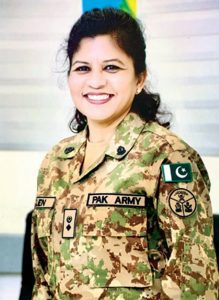
In recent years, the role of the Pakistan Army Chief has evolved, with a focus on professional military leadership and a reduced direct involvement in politics. The current Chief of Army Staff, General Qamar Javed Bajwa, has emphasized the importance of maintaining a professional and apolitical military.
In conclusion, the history of Pakistan’s military leadership is a testament to the significant role played by its army chiefs in shaping the country’s political and military landscape. The first Muslim army chief, General Muhammad Ayub Khan, set the stage for a tradition of strong military leadership that has influenced Pakistan’s governance and policies. Understanding this history is essential for appreciating the complex dynamics between the military and political spheres in Pakistan.
Sources: The above answer is based on information from
- Pakistan’s Army – EFSAFS
- Commander in Chief of Pakistan Army – Wikipedia
- History: The Birth of Pakistan Army – Dawn Editorials
- Ayub Khan: Biography – Britannica