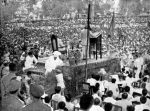
Excerpt: This post answers the questions “Who is the first assassinated leader of Pakistan? Who was first assassinated in Pakistan after independence? Who is called Shaheed e Millat in Pakistan?”
Pakistan, a country with a tumultuous history, has witnessed the tragic loss of many prominent political leaders over the years. Assassinations, often surrounded by mystery and political tension, have played a significant role in shaping the nation’s political landscape. In this blog post, we will explore the first assassinated leader of Pakistan and look into other key political assassinations and assassination attempts in the country’s history.
Who is the First Assassinated Leader of Pakistan?
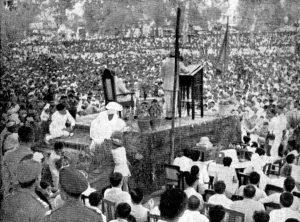
The first assassinated leader of Pakistan was Liaquat Ali Khan, the country’s second Prime Minister. He was tragically shot on October 16, 1951, while addressing a gathering at Company Bagh (later renamed Liaquat Bagh) in Rawalpindi. Khan was one of the founding fathers of Pakistan and played a crucial role in the country’s formation.
His assassination shocked the nation, as he was considered a key figure in guiding Pakistan through its early years. The identity of his killer, and the motives behind the assassination, remain subjects of debate. Some believe it was a political conspiracy, while others suspect foreign involvement. Despite extensive investigations, the case was never conclusively solved.
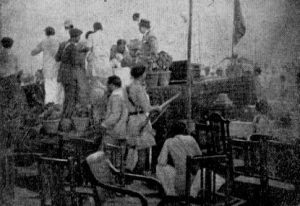
Other Assassinated Leaders of Pakistan (1952-2024)
Pakistan’s political scene has been marred by several high-profile assassinations over the years. Below are some of the notable leaders who lost their lives to violence:
- Benazir Bhutto (2007)
Former Prime Minister Benazir Bhutto, the daughter of Zulfikar Ali Bhutto, was assassinated on December 27, 2007, in a gun and bomb attack during an election rally in Rawalpindi. Benazir’s death left Pakistan in shock, and her assassination led to widespread protests. Investigations pointed towards militants, but the true culprits remain unclear. - Zulfikar Ali Bhutto (1979)
Pakistan’s first directly elected Prime Minister, Zulfikar Ali Bhutto, was sentenced to death in 1979 after being convicted of conspiracy to commit murder. Despite appeals for clemency, he was executed on April 4, 1979, by hanging. His death was seen as politically motivated by his rivals, leading to questions about the fairness of the trial. - Salman Taseer (2011)
On January 4, 2011, Salman Taseer, the Governor of Punjab, was assassinated by his own bodyguard, Mumtaz Qadri. Taseer had been vocal in his opposition to Pakistan’s blasphemy laws, a stance that ultimately led to his murder. Qadri, who saw Taseer as a blasphemer, shot him in broad daylight in Islamabad. - Shahbaz Bhatti (2011)
The Federal Minister for Minorities, Shahbaz Bhatti, was assassinated on March 2, 2011, in Islamabad. Bhatti was an outspoken critic of Pakistan’s controversial blasphemy laws and was targeted for his stance on the protection of religious minorities. His death highlighted the ongoing struggle for religious freedom in Pakistan.
Assassination Attempts on Pakistani Leaders
Throughout Pakistan’s history, there have been numerous attempts on the lives of its political leaders. Here are some of the most notable ones:
- General Zia-ul-Haq (1988)
On August 17, 1988, General Zia-ul-Haq, the then President of Pakistan, was killed in a mysterious plane crash, along with several top military officers and the U.S. Ambassador. While officially classified as an accident, many conspiracy theories suggest that the crash could have been an assassination attempt. - Imran Khan (2013)
In 2013, during his election campaign, Imran Khan, the chairman of the Pakistan Tehreek-e-Insaf (PTI), narrowly escaped an assassination attempt when his convoy was attacked with gunfire. He was injured in the attack, but he survived and continued his political journey. - Pervez Musharraf (2003)
Former military ruler Pervez Musharraf survived at least two assassination attempts in 2003. The first attempt was on December 14, 2003, when a bomb was detonated under a bridge his motorcade was supposed to pass. The second attempt occurred later that month, but Musharraf emerged unscathed both times.
Who to Blame for Assassinations?
The question of who is responsible for these political assassinations remains contentious. In many cases, investigations have pointed to political rivals, extremist groups, or foreign agents, but no one group can be definitively blamed. In countries with political instability like Pakistan, assassinations are often the result of a combination of factors, including:
- Political Rivalry: Often, the assassinations are linked to power struggles between politicians or factions within the government.
- Extremist Groups: Religious extremists who oppose certain policies or ideologies have targeted leaders who they perceive as a threat to their beliefs.
- Foreign Influence: Some believe that foreign governments may have a hand in the assassinations, especially if a leader is seen as opposing their interests.
The assassinations of political leaders in Pakistan are a tragic reflection of the country’s unstable political climate. While some perpetrators have been identified, many of these deaths remain shrouded in mystery. As Pakistan moves forward, it must continue to address the underlying issues of political corruption, extremism, and instability to prevent future tragedies.
Sources: The above answer is based on information from
- Benazir Bhutto, Liaquat Ali Khan – Britannica
- Assassinated Pakistani politicians – Wikipedia
- Pakistan’s history of coups and assassination – Reuters
- Crosshair: Timeline of attacks on Pakistani premiers – TRT World
- Report – Dawn News
- Al Jazeera
- The New York Times
Related Questions