
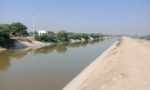
Excerpt: This post answers the questions “Which is the longest canal in Punjab Pakistan? What is the longest canal of Punjab Pakistan? Which canal is the largest in Punjab Pakistan?”
Pakistan boasts an extensive network of canals that play a crucial role in its agricultural and water management systems. These canals are vital for providing irrigation to vast agricultural lands, supporting the livelihoods of millions of people. In this blog post, we will explore the longest canal in Pakistan, its significance, and its features.
Which is the longest canal in Punjab Pakistan?

The longest canal in terms of length in Punjab, Pakistan, is the Kachhi Canal. This extensive waterway stretches across both Punjab and Balochistan provinces, providing irrigation to a large area of agricultural land. The Kachhi Canal is a remarkable feat of engineering and plays a vital role in the country’s agricultural productivity. Although the Kachhi Canal is the longest canal passing through Punjab, it is primarily used for irrigation in Balochistan.
The longest canal that lies entirely within Punjab and serves as a major source of water supply for irrigation in the province is the Lower Bari Doab Canal (LBDC). It is part of the Sutlej Valley Project canal system and has a total length of 201 kilometers. This canal plays a crucial role in the irrigation infrastructure of Punjab.
Kachhi Canal: An Overview
Location and Overview
The Kachhi Canal originates from the Taunsa Barrage on the Indus River in Punjab province and extends into Balochistan. The canal spans approximately 499 kilometers (310 miles), making it the longest canal in Pakistan. The main canal is lined for 391 kilometers (243 miles), ensuring efficient water distribution.
Importance of Kachhi Canal
The Kachhi Canal is of immense importance to Pakistan’s agricultural sector. It provides sustainable irrigation water supply to around 720,000 acres of agricultural land in Balochistan and 30,000 acres in Punjab. This irrigation support is crucial for enhancing agricultural productivity and ensuring food security in the region.
Water Supply and Irrigation
The Kachhi Canal has a discharge capacity of 6,000 cubic meters per second (cusecs), which is essential for maintaining a consistent water supply to the agricultural lands it serves. The canal’s extensive network of branches, distributaries, and minors ensures that water reaches every part of the irrigated area, maximizing crop yields and supporting the livelihoods of farmers.
Environmental Impact
The construction and operation of the Kachhi Canal have significant environmental implications. The canal helps maintain the water table in the region, preventing soil degradation and desertification. Additionally, the regulated water flow helps maintain the stability of riverbanks and prevents soil erosion, contributing to the overall health of the environment.
Challenges and Future Prospects
Despite its importance, the Kachhi Canal faces several challenges that need to be addressed to ensure its long-term sustainability. One of the main challenges is sedimentation, which can reduce the canal’s capacity and obstruct water flow. Regular maintenance and dredging are necessary to keep the canal functioning efficiently. Additionally, the growing demand for water and energy in Pakistan necessitates the expansion and upgrading of the canal’s infrastructure. Future projects aimed at improving water management, upgrading infrastructure, and implementing modern irrigation techniques will be crucial in addressing these challenges and ensuring the continued success of the Kachhi Canal.
The Kachhi Canal stands as a testament to Pakistan’s commitment to enhancing its agricultural productivity and ensuring food security. As the longest canal in the country, it plays a vital role in providing irrigation to vast agricultural lands, supporting the livelihoods of millions of people. While challenges remain, continued investment in maintenance, infrastructure, and sustainable water management practices will ensure that the Kacchi Canal continues to be a valuable resource for generations to come. Understanding the importance of such infrastructure highlights the need for ongoing efforts to build and maintain canals that can support agricultural development and contribute to the overall well-being of the nation.
Sources: To ensure the accuracy and authenticity of the information provided, the following sources were referenced:
- Kachhi Canal Project – Pakistan Water and Power Development Authority (WAPDA)
- Kachhi Canal Project – Ministry of Water Resources
- Work on Kachhi Canal started – Dawn
- Kachhi Canal Ready for Opening – Dawn
- Kacchi Canal set to bring about ‘green revolution’: Report – Pakistan Today
- Kachhi Canal Project – Wikipedia
- Issue Brief on Kachhi Canal – Institute of Strategic Studies Islamabad

