
Excerpt: This post answers the questions “Who was the first Pakistani president to visit India? Who was the Pakistan president who visited India first, after independence? What is the name of first Pakistani president to visit India after partition?”
The early years of Pakistan’s independence were marked by significant diplomatic efforts to establish and strengthen relationships with neighboring countries and global powers. One of the most notable events in the history of Pakistan-India relations was the visit of the first President of Pakistan to India. This visit was a crucial step towards fostering better diplomatic ties and addressing mutual concerns between the two neighboring countries.
Who was the first Pakistani president to visit India?

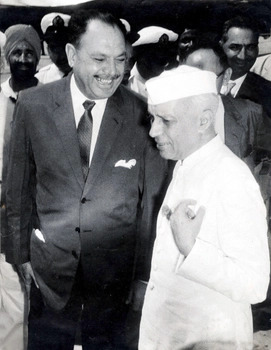
The first President of Pakistan to visit India was Field Marshal Ayub Khan. His visit to India took place on the 1st of September, 1959. Ayub Khan, who was a military leader and statesman, served as the President of Pakistan from 1958 to 1969. His visit to India marked a significant moment in the diplomatic history of the two countries, as it was an attempt to improve bilateral relations and address various issues of mutual concern.
Objectives of Ayub Khan’s Visit on 01 September 1959 to India
Ayub Khan’s visit to India in September 1959 had several key objectives:
- Strengthening Diplomatic Relations: One of the primary objectives of Ayub Khan’s visit was to strengthen diplomatic relations between Pakistan and India. Both countries had experienced tensions and conflicts following their independence in 1947, and it was essential to establish a framework for peaceful coexistence and mutual cooperation.
- Addressing Border Issues: Border disputes and issues related to territorial integrity were significant concerns for both Pakistan and India. Ayub Khan’s visit aimed to address these issues through diplomatic dialogue and negotiation, seeking peaceful resolutions to territorial disputes.
- Promoting Economic Cooperation: Economic cooperation between Pakistan and India was another critical objective of the visit. Ayub Khan sought to explore opportunities for trade and economic collaboration that could benefit both countries and contribute to their economic growth and stability.
- Ensuring Regional Security: Regional security and defense cooperation were also on the agenda during Ayub Khan’s visit. Both countries needed to address issues related to border security and defense cooperation to ensure regional stability and peace.
- Fostering People-to-People Contact: Ayub Khan’s visit aimed to foster people-to-people contact and cultural exchange between Pakistan and India. Such initiatives were seen as essential for building mutual understanding and trust between the two nations.
Pakistan & India: Bilateral Relations during the Cold War Era
Historical Context of Bilateral Relations
The bilateral relations between Pakistan and India during the Cold War era were shaped by historical, political, and geopolitical factors. The partition of British India in 1947 led to the creation of two separate nations—India and Pakistan. This partition was accompanied by communal violence, mass migrations, and deep-seated mistrust between the two nations.
Geopolitical Dynamics of the Cold War
During the Cold War, the global geopolitical landscape was dominated by the rivalry between the United States and the Soviet Union. Both Pakistan and India sought to navigate this complex landscape by aligning themselves with different global powers. Pakistan, under Ayub Khan, pursued a policy of alignment with the United States, seeking military and economic assistance. India, on the other hand, adopted a policy of non-alignment, seeking to maintain its independence from both superpowers while also receiving assistance from the Soviet Union.
Key Issues in Bilateral Relations
- Kashmir Conflict: The territorial dispute over the region of Kashmir was one of the most significant issues in India-Pakistan relations during the Cold War era. The conflict over Kashmir led to multiple wars and skirmishes between the two countries, further complicating bilateral relations.
- Cross-Border Tensions: Cross-border tensions and incidents of violence were frequent during the Cold War era. Both countries accused each other of supporting militant groups and engaging in acts of aggression, leading to heightened tensions and conflicts.
- Economic Collaboration: Despite the challenges, there were efforts to promote economic collaboration between Pakistan and India. Trade agreements, cross-border trade, and economic partnerships were pursued to enhance economic ties and mutual prosperity.
- Diplomatic Engagement: Diplomatic engagement and negotiations were essential for addressing the various issues in India-Pakistan relations. Several peace initiatives and diplomatic efforts were undertaken to resolve conflicts and promote dialogue between the two nations.
Opportunities for Cooperation
Despite the numerous challenges, there were opportunities for cooperation and collaboration between Pakistan and India during the Cold War era. Initiatives aimed at promoting cultural exchange, academic collaboration, and people-to-people contact played a role in building bridges between the two nations. Such efforts were seen as essential for fostering mutual understanding and trust, which could pave the way for a more peaceful and prosperous future.
The visit of the first President of Pakistan to India, Ayub Khan, was a significant event in the history of India-Pakistan relations. It marked an attempt to address mutual concerns and establish a foundation for diplomatic engagement and cooperation. While the journey of bilateral relations between Pakistan and India during the Cold War era was fraught with challenges, efforts to promote dialogue, cooperation, and understanding remained crucial. As both nations continue to navigate their complex relationship, the importance of diplomatic engagement and mutual respect cannot be overstated.
Sources: The above answer is based on information from
- Ayub Meet Nehru – The British Pathe
- Muhammad Ayub Khan News Photo, Welcome to India – Times of India
- Government of Pakistan, Ministry of Foreign Affairs
- Ministry of External Affairs, Government of India
- Historical records and documents on India-Pakistan relations
- Various academic articles and publications on South Asian diplomacy and bilateral relations

