Excerpt: This post answers the questions “Who was the First Muslim Governor of Punjab Pakistan? Who was the First Muslim Governor of Punjab after independence of Pakistan? Who was the First Muslim Governor of Punjab?”
Punjab, the beating heart of Pakistan, is renowned for its rich history and vibrant cultural heritage. As one of Pakistan’s most significant provinces, Punjab has played a crucial role in shaping the nation’s socio-political landscape. The journey of governance in Punjab reflects the trials, tribulations, and triumphs of the region. A pivotal moment in its governmental history was the appointment of the first Muslim Governor of Punjab after Pakistan’s independence, a milestone that underscored the province’s evolving political dynamics.
Who was the First Muslim Governor of Punjab Pakistan?
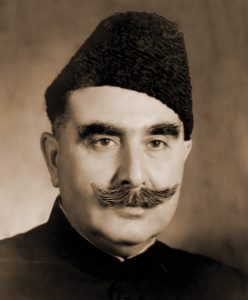
The first Muslim Governor of Punjab was Sardar Abdur Rab Nishtar. He took office on 2nd August 1949, marking the beginning of a new chapter in the province’s administration. Born on 13th June 1899, in Peshawar, Sardar Abdur Rab Nishtar was a prominent political figure with a deep commitment to public service. He was educated at Aligarh Muslim University, where he earned his LL.B degree.
Prior to becoming Governor, Sardar Abdur Rab Nishtar played an active role in the Pakistan Movement and was a close associate of Muhammad Ali Jinnah. He held various important positions, including the Minister of Communications. As Governor, he focused on consolidating Pakistan’s administration, promoting socio-economic development, and fostering communal harmony in a diverse region. His tenure laid the groundwork for Punjab’s modern governance and development.
The Province of Punjab – A Historical and Cultural Overview
Historical Evolution of Punjab
Punjab’s history dates back to ancient times, being one of the earliest cradles of civilization. The region has witnessed the rise and fall of numerous empires, including the Maurya, Gupta, and Mughal Empires. The area was known for its strategic importance, rich resources, and fertile lands. The Indus Valley Civilization, one of the world’s oldest urban cultures, flourished here around 2500-1500 BCE.
During the medieval period, Punjab saw significant Islamic influence, beginning with the Arab invasion led by Muhammad bin Qasim in 712 CE. This influence peaked during the Mughal era (1526-1738), which brought about cultural fusion and architectural marvels such as the Badshahi Mosque and Shalimar Gardens. The arrival of the British in the mid-19th century marked the start of the colonial era, which lasted until the partition of India in 1947.
Geographic and Demographic Composition
The name Punjab is derived from the Persian words “panj” (five) and “ab” (water), referring to the five rivers – Jhelum, Chenab, Ravi, Beas, and Sutlej. These rivers make the region exceptionally fertile, contributing to its agricultural prominence. Punjab is Pakistan’s most populous province, with its capital, Lahore, serving as a cultural and economic hub.
Punjab’s demographic landscape is diverse, with a mix of various ethnic and religious communities. The region is predominantly inhabited by Punjabis who speak the Punjabi language. The culture is a vibrant blend of traditional and modern elements, reflecting its historical evolution and socio-economic changes.
Economic Development and Infrastructure
Punjab is the backbone of Pakistan’s economy due to its agricultural productivity and industrial output. It is often referred to as the “Granary of Pakistan” for its substantial contribution to the country’s grain production. The province also hosts a diverse industrial base, including textiles, machinery, and electronics.
Infrastructure development in Punjab has been a priority for successive governments. Key initiatives include the construction of motorways, bridges, and irrigation systems to boost connectivity and agricultural efficiency. Major cities like Lahore, Faisalabad, and Multan are economic powerhouses with significant industrial and commercial activities.
The appointment of Sardar Abdur Rab Nishtar as the first Muslim Governor of Punjab after Pakistan’s independence was a landmark event in the province’s history. His leadership set the stage for the modern governance and socio-economic advancements that Punjab enjoys today. Understanding the historical and contemporary aspects of Punjab helps us appreciate its pivotal role in Pakistan’s development. As the province continues to grow and evolve, the legacy of leaders like Sardar Abdur Rab Nishtar remains an inspiring testament to the enduring spirit of Punjab.
Sources: The above answer is based on information from
- Introduction – Governor House Punjab Web Portal
- Abdur Rab Nishtar – Wikipedia
- History – Punjab Portal
- Punjab | History, Culture & Economy – Britannica
- History of Punjab – Wikipedia