Excerpt: This post answers the questions “Who was the first Governor of Balochistan? What is the name of first Governor of Balochistan Pakistan? Who was Balochistan first Governor?”
Balochistan, the largest province of Pakistan by area, has a rich history and a unique cultural heritage. After the dissolution of the One Unit policy in 1970, Balochistan was established as a separate province. This marked a significant moment in the political landscape of Pakistan, as it paved the way for the appointment of the first governor of Balochistan. This individual played a crucial role in shaping the early political framework of the province.
Who was the first Governor of Balochistan?
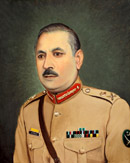
The first governor of Balochistan was General Riaz Hussain. He served from July 1, 1970, to December 25, 1971. He also served as the 3rd Director-General of ISI from 1959 to 1966.
General Riaz Hussain’s tenure was marked by the initial efforts to establish a stable administrative structure in the newly formed province. His leadership was instrumental in navigating the challenges that came with the province’s newfound status.
Balochistan After Independence
The Formation of Balochistan as a Province
After the independence of Pakistan in 1947, Balochistan was initially part of the larger province of West Pakistan under the One Unit policy. This policy aimed to centralize the administration of the country. However, it faced significant opposition, particularly from the people of Balochistan, who felt that their unique cultural and political identity was being undermined. The dissolution of the One Unit policy in 1970 led to the establishment of Balochistan as a separate province, allowing it to have its own provincial government and administrative framework.
Political Landscape and Governance
The political landscape of Balochistan has been shaped by various factors, including tribal dynamics, regional autonomy movements, and federal policies. The province has seen periods of political instability, with frequent changes in leadership and governance structures. Despite these challenges, Balochistan has made significant strides in establishing a functional political system that reflects the aspirations of its people.
Economic Development and Challenges
Balochistan is rich in natural resources, including minerals, natural gas, and oil. However, the province has faced significant challenges in harnessing these resources for economic development. Issues such as inadequate infrastructure, political instability, and security concerns have hindered the province’s economic growth. Efforts are being made to address these challenges through various development projects and initiatives aimed at improving the socio-economic conditions of the people of Balochistan.
Social and Cultural Dynamics
Balochistan is home to a diverse population with a rich cultural heritage. The province’s social fabric is characterized by a strong sense of tribal identity and traditional values. Despite the challenges posed by modernization and political changes, the people of Balochistan have managed to preserve their cultural heritage and continue to celebrate their traditions and customs.
Security Concerns and Insurgency
One of the significant challenges faced by Balochistan is the issue of security. The province has experienced periods of insurgency and conflict, driven by demands for greater autonomy and control over local resources. The federal government has undertaken various measures to address these security concerns and promote peace and stability in the region.
The history of Balochistan after independence is a testament to the resilience and determination of its people. From the establishment of the province to the challenges of governance and economic development, Balochistan has navigated a complex political landscape. The appointment of the first governor, General Riaz Hussain, marked the beginning of a new era for the province. As Balochistan continues to evolve, it remains an integral part of Pakistan’s national identity, contributing to the country’s cultural and economic diversity.
Sources: The above answer is based on information from
- Provincial Assembly of Balochistan – Official Website
- History of Balochistan – Wikipedia
- Baloch nationalism – Wikipedia
- How Balochistan became a part of Pakistan – The Nation