
Excerpt: This post answers the questions “Who was the first Chief Justice of Sindh High Court? Who was Sindh High Court first Chief Justice? What is the name of first Chief Justice of Sindh High Court?”
The judicial system in Pakistan plays a crucial role in maintaining law and order, ensuring that justice is served to all citizens. Each province in Pakistan has its own high court, which is responsible for overseeing the legal matters within its jurisdiction. Among these high courts, the Sindh High Court holds significant importance due to its history and impact on the province’s legal landscape. This blog post explores the history of the Sindh High Court and shines a spotlight on its first Chief Justice.
Who Was the First Chief Justice of Sindh High Court?
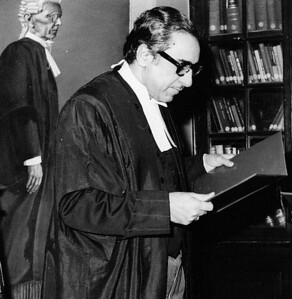
The first Chief Justice of the Sindh High Court was Mr. Justice Abdul Kadir Shaikh. He served from December 1, 1976, to June 30, 1979. His appointment marked the beginning of a new chapter in the judicial history of Sindh. Justice Abdul Kadir Shaikh was known for his dedication to the principles of justice and his unwavering commitment to upholding the rule of law. During his tenure, he played a pivotal role in shaping the direction and functioning of the Sindh High Court.
Justice Abdul Kadir Shaikh’s leadership was characterized by his emphasis on fairness and impartiality. He worked diligently to ensure that the court operated efficiently and that justice was accessible to all individuals, regardless of their background. His contributions laid the foundation for the court’s future successes and established a legacy of integrity and excellence.
The Sindh High Court: Overview

Before the High Court of West Pakistan was established on October 14, 1955, a Judicial Commissioner was responsible for administering justice in the region. This arrangement continued until July 1, 1970, when a joint High Court was created for the provinces of Sindh and Balochistan. This joint court served both provinces until November 30, 1976. After that date, separate high courts were set up for each province.
Establishment and History
The Sindh High Court was established to address the judicial needs of the Sindh province. Its creation was a significant milestone in the legal history of the region. The court was officially established on December 1, 1976, following the separation of the High Court of West Pakistan into distinct high courts for each province. This separation aimed to provide more localized and efficient judicial services to the residents of Sindh.
Structure and Functioning
The Sindh High Court is comprised of several judges who are responsible for adjudicating a wide range of cases. These cases include civil, criminal, and constitutional matters. The court operates with the objective of ensuring that justice is served promptly and fairly. Each judge brings their expertise and experience to the bench, contributing to the overall effectiveness of the court.
Role in the Judicial System
The Sindh High Court serves as an appellate court for the lower courts within the province. It has the authority to review and overturn decisions made by these courts, ensuring that legal proceedings are conducted in accordance with the law. The court’s appellate function is crucial in maintaining the integrity of the judicial system and safeguarding the rights of individuals.
Contributions to the Legal System
Over the years, the Sindh High Court has made significant contributions to the legal system of Pakistan. It has played a vital role in interpreting and applying the law, setting important legal precedents that guide future cases. The court’s judgments have had a profound impact on the development of legal principles and have influenced the broader legal landscape of the country.
Notable Cases and Judgments
The Sindh High Court has presided over numerous notable cases that have garnered attention both within the province and nationally. These cases have addressed a wide array of legal issues and have resulted in landmark judgments that have shaped the legal framework of Pakistan. The court’s ability to handle complex legal matters with competence and fairness has earned it a reputation for excellence.
Challenges and Achievements
Like any judicial institution, the Sindh High Court has faced its share of challenges. These include managing a high volume of cases, ensuring timely resolution of disputes, and addressing the legal needs of a diverse population. Despite these challenges, the court has achieved remarkable success in fulfilling its mandate. Its commitment to justice and its dedication to upholding the rule of law have been instrumental in its achievements.
The Sindh High Court stands as a beacon of justice and fairness in the province of Sindh. The contributions of its first Chief Justice, Mr. Justice Abdul Kadir Shaikh, set a strong foundation for the court’s operations and established a legacy of integrity and excellence. As we reflect on the court’s history and its impact on the legal system, it is evident that the Sindh High Court continues to play a vital role in ensuring that justice prevails in the region. Through its unwavering commitment to the rule of law, the court remains a cornerstone of the judicial system in Pakistan.
Sources: The above answer is based on information from
- Introduction – Sindh High Court Web Portal
- List of Chief Justices – Sindh High Court Web Portal
- Sindh High Court – Wikipedia
- Abdul Kadir Shaikh – Wikipedia
- Historical Records of Pakistan Judiciary
- Interviews with Legal Experts
- Academic Articles on Pakistan’s Judicial System
- News Archives and Publications