Excerpt: This post answer the questions “Who was the first army chief of Pakistan? What is the name of Pakistan’s first army chief? Who was the first army chief of Pakistan?”
When Pakistan emerged as an independent nation in 1947, it faced numerous challenges. One of the biggest tasks was to create a strong military to ensure the country’s safety and security. Building a new army from scratch required immense effort, dedication, and vision. This blog delves into the origins of the Pakistan Army, highlighting the role of its first army chief and providing a comprehensive overview of the army’s structure, equipment, and achievements.
Who was the first army chief of Pakistan?
The first army chief of Pakistan was General Sir Frank Walter Messervy. Appointed in 1947, he played a pivotal role in laying the foundation of the newly-formed Pakistan Army. His leadership and expertise were crucial during the early stages of the country’s military history. Under his guidance, the Pakistan Army began to take shape and set the course for its future development.
Who was Frank Messervy?
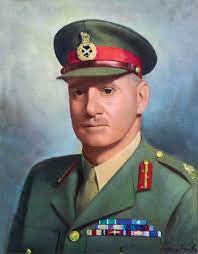
Frank Messervy was born on December 9, 1893, in Trinidad, British West Indies. He was a British Indian Army officer who had an illustrious military career. Messervy attended the prestigious Royal Military College, Sandhurst, and was commissioned into the Indian Army in 1913. He served in both World War I and World War II, holding several key positions and earning a reputation for his strategic brilliance and dedication.
During World War II, Messervy commanded various divisions and corps, including the 7th Armoured Division and the IV Corps in the Middle East and Burma. His military prowess and leadership skills were widely recognized, making him a respected figure in the British Indian Army.
When Pakistan gained independence in 1947, Messervy was appointed as the first commander-in-chief of the Pakistan Army. He served in this role from August 15, 1947, to February 10, 1948. Despite his short tenure, Messervy’s contributions were significant. He focused on organizing the new army, addressing the immediate challenges posed by the partition, and setting a professional tone for the military establishment. His experience and dedication were instrumental in navigating the early hurdles faced by the Pakistan Army.
The Pakistan Army: Strength, Ranks, Weapons, and Achievements
Strength of the Pakistan Army
The Pakistan Army is one of the largest standing armies in the world, with an estimated active force of over 650,000 personnel. This strength includes a mix of regular troops, paramilitary forces, and reservists. The army is structured to respond to a wide range of threats, from conventional warfare to counter-insurgency operations.
In addition to its active duty personnel, the Pakistan Army also has a sizable reserve force that can be mobilized in times of need. These reserves are trained and ready to support the regular army in various operations, ensuring that the country can maintain a robust defense posture at all times.
Ranks in the Pakistan Army
The Pakistan Army follows a structured hierarchy, which includes various ranks. These ranks are designed to ensure a clear chain of command and effective leadership at all levels. The major ranks in the Pakistan Army are as follows:
- Field Marshal: The highest rank, awarded for exceptional service and achievements. It is rarely bestowed.
- General: The highest active rank, typically held by the chief of army staff.
- Lieutenant General: Senior commanders who oversee corps and other large formations.
- Major General: Commanders of divisions and key staff positions.
- Brigadier: Senior officers who command brigades and other units.
- Colonel: Officers who command battalions and regiments.
- Lieutenant Colonel: Officers who assist in commanding battalions and regiments.
- Major: Mid-level officers with various command and staff responsibilities.
- Captain: Junior officers who lead companies and other smaller units.
- Lieutenant: Entry-level officers who lead platoons and serve in various roles.
- Second Lieutenant: The initial rank for newly commissioned officers.
These ranks ensure that the Pakistan Army operates efficiently, with a clear chain of command and well-defined roles for officers at all levels.
Weapons and Equipment of the Pakistan Army
The Pakistan Army is equipped with a diverse range of weapons and modern technology. This ensures that the army is capable of responding to various threats and challenges effectively. The key categories of weapons and equipment include:
- Infantry Weapons: The backbone of the army’s firepower, including rifles, machine guns, and pistols. Notable examples include the G3 and HK33 rifles, as well as the MP5 submachine gun.
- Armored Vehicles: Tanks and armored personnel carriers that provide mobility and protection to troops. The Al-Khalid and Al-Zarrar tanks are indigenous designs that enhance the army’s armored capabilities.
- Artillery: Field guns, howitzers, and rocket systems that provide long-range fire support. The M109A5 howitzer and the A-100 multiple rocket launcher are key components of the army’s artillery arsenal.
- Air Defense Systems: Surface-to-air missiles and anti-aircraft guns that protect against aerial threats. Systems like the LY-80 and HQ-9 are integral to the army’s air defense strategy.
- Aviation: Helicopters and drones used for reconnaissance, transport, and combat support. The Mi-17 and AH-1 Cobra helicopters, as well as the Burraq drone, are notable assets in the army’s aviation fleet.
These weapons and equipment ensure that the Pakistan Army remains a modern and capable force, ready to defend the country’s sovereignty and interests.
Achievements of the Pakistan Army
The Pakistan Army has been involved in various military operations and peacekeeping missions, demonstrating its capabilities and commitment to national and international security. Some notable achievements include:
- Indo-Pakistani Wars: The Pakistan Army has been engaged in several conflicts with India, including the wars of 1947-48, 1965, and 1971. Despite the challenges, the army has shown resilience and tactical prowess in these conflicts.
- Kargil Conflict: In 1999, the Pakistan Army played a significant role in the Kargil conflict, displaying strategic planning and execution in a challenging mountainous terrain.
- Counter-Insurgency Operations: The Pakistan Army has conducted successful campaigns against insurgent groups within the country, particularly in the tribal areas and Balochistan. Operations like Zarb-e-Azb and Radd-ul-Fasaad have been instrumental in restoring peace and stability.
- UN Peacekeeping Missions: The Pakistan Army has a proud history of contributing to global peace by participating in United Nations peacekeeping missions in various regions, including Africa, the Balkans, and the Middle East. Pakistani troops have earned a reputation for professionalism and dedication in these missions.
The formation of the Pakistan Army and the role of its first army chief, General Sir Frank Walter Messervy, mark a significant chapter in Pakistan’s history. The legacy of discipline, dedication, and valor set by Messervy continues to inspire the armed forces today. As the Pakistan Army evolves with modern advancements, it remains a cornerstone of the nation’s defense and pride. With its structured hierarchy, modern equipment, and notable achievements, the Pakistan Army stands as a testament to Pakistan’s resilience and commitment to safeguarding its sovereignty.
Sources: The above answer is based on the information given by
- History of the Pakistan Army by General Muhammad Musa
- Pakistan Armed Forces official website
- “The Military and Politics in Pakistan” by Hasan-Askari Rizvi
- Ranks – Pakistan Air Force Web Portal
- Pakistan Reserved ACT – Pakistan Code
- India VS Pakistan – Al Jazeera
- Pakistan Armed Services Board – PASB
- Structure of Pakistan Army – Wikipedia
- Britannica