
Excerpt: This post answers the questions “Which mountain pass is at the lowest elevation in Pakistan? Which is Pakistan’s lowest elevation mountain pass? What mountain pass is at the lowest elevation in Pakistan?”
Mountain passes are crucial pathways that traverse through the otherwise formidable terrains of towering mountains. These natural gateways have played significant roles in trade, travel, and military campaigns throughout history. Pakistan, with its diverse and rugged topography, is home to several important mountain passes that have been vital for connectivity and commerce. Among these, one pass stands out for its relatively lower elevation, offering a unique blend of historical significance and practical importance.
Which Mountain Pass is at the Lowest Elevation in Pakistan?
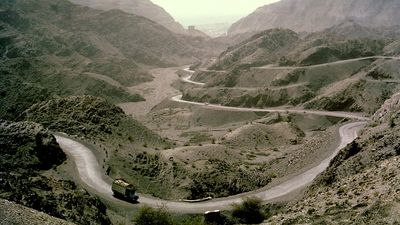
In the rugged and mountainous landscape of Pakistan, the Khyber Pass holds the distinction of being the mountain pass at the lowest elevation. Located in the Khyber Pakhtunkhwa province, this pass has an elevation of approximately 1,070 meters (3,510 feet) above sea level. The Khyber Pass is not only the lowest mountain pass in the country but also one of the most historically significant routes, connecting the town of Landi Kotal near the Afghanistan border to the city of Peshawar.
Khyber Pass: A Gateway Through History
Historical Significance
The Khyber Pass has been a crucial corridor for various civilizations throughout history. It has served as a key route for trade, migration, and military expeditions. The pass has witnessed the movement of numerous armies, traders, and travelers, including the likes of Alexander the Great, Genghis Khan, and the British Raj. Its strategic importance has made it a focal point for empires seeking to control the region.
Geographic Location and Route
The Khyber Pass stretches for about 53 kilometers (33 miles) through the Spin Ghar mountains, also known as the Safed Koh range. The pass begins near the town of Jamrud in Pakistan and extends to Torkham, the border crossing with Afghanistan. The route follows a winding path through the rugged terrain, with steep cliffs and narrow valleys. Despite its challenging geography, the pass has been a vital link between Central Asia and the Indian subcontinent.
Economic and Trade Importance
For centuries, the Khyber Pass has been a major trade route, facilitating the exchange of goods between the East and West. It has been an integral part of the Silk Road, connecting traders from China, India, Persia, and beyond. The pass enabled the transportation of silk, spices, precious stones, and other commodities, contributing to the economic prosperity of the region. In modern times, the Khyber Pass continues to play a significant role in trade and commerce, with numerous goods passing through this historic route.
Military and Strategic Value
The strategic importance of the Khyber Pass cannot be overstated. Throughout history, controlling the pass has been crucial for military campaigns and defense. Various empires and armies have fought to secure this vital corridor, recognizing its significance for regional dominance. During the British colonial era, the pass served as a key military route, and several forts and garrisons were established to protect and control the area. Today, the pass remains a critical route for the movement of troops and supplies.
Cultural and Social Impact
The Khyber Pass is not just a geographical feature; it is a cultural landmark that has shaped the history and identity of the region. The pass has facilitated cultural exchanges, allowing people from different regions to interact and share their traditions, languages, and beliefs. The diverse communities living along the route have developed a unique blend of cultures, influenced by the various travelers and traders who have passed through. The pass is also home to numerous historical monuments, including forts, watchtowers, and ancient caravanserais, which serve as reminders of its rich heritage.
The Khyber Pass stands as a testament to the enduring legacy of trade, travel, and cultural exchange in the region. As the mountain pass with the lowest elevation in Pakistan, it has played a pivotal role in shaping the history and development of the area. From its strategic importance in military campaigns to its significance as a trade route, the Khyber Pass continues to be a vital corridor that connects people and places. As Pakistan continues to evolve, the Khyber Pass remains a symbol of the country’s rich historical heritage and its ongoing journey of progress and connectivity.
Source: To ensure the accuracy and authenticity of the information provided, the following sources were referenced:
- Historical Significance of the Khyber Pass – Dawn
- Khyber Pass – Wikipedia
- Mountain Passes in Pakistan: History, Facts & More! – Zameen