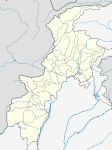
Excerpt: This post answers the questions “Which is the smallest province of Pakistan by area? Which province of Pakistan is smallest on the basis of area? What is the smallest province of Pakistan by area?”
Pakistan is a land of diverse landscapes, ranging from towering mountains to sprawling plains, and lush green valleys to arid deserts. Each province in Pakistan boasts unique features and characteristics that make it distinct. Understanding the geographical layout of Pakistan can help us appreciate the beauty and significance of each region. In this blog post, we will explore the smallest province of Pakistan by area, uncovering its unique charm and importance.
Which is the smallest province of Pakistan by area?
When we talk about the smallest province of Pakistan in terms of area, we refer to the province of Khyber Pakhtunkhwa. Khyber Pakhtunkhwa, also known as KP or KPK, covers an area of 101,741 square kilometers. Despite being the smallest in terms of land area, Khyber Pakhtunkhwa holds significant importance due to its strategic location, rich culture, and historical value.
Khyber Pakhtunkhwa: An Overview
Geographical Overview
Khyber Pakhtunkhwa is situated in the northwestern region of Pakistan, bordering Afghanistan to the west and north, Gilgit-Baltistan to the northeast, Azad Jammu and Kashmir to the east, and Punjab and Balochistan to the south. The province is characterized by rugged mountainous terrain, fertile valleys, and river plains. The mighty Indus River flows through Khyber Pakhtunkhwa, providing water for irrigation and sustaining the agricultural activities of the region.
Historical Significance
Khyber Pakhtunkhwa has a rich historical background, serving as a gateway for various civilizations and empires over the centuries. The region was part of the ancient Gandhara civilization, which flourished around 2,500 years ago and was renowned for its art and culture. The province also witnessed the influence of the Mauryan, Kushan, and Gupta empires, as well as the arrival of Islam in the 7th century. The historic Khyber Pass, a mountain pass connecting Pakistan and Afghanistan, has been a crucial trade route and invasion path throughout history.
Cultural Heritage
Khyber Pakhtunkhwa is known for its diverse and vibrant culture. The people of the province, predominantly Pashtuns, are known for their hospitality, bravery, and strong adherence to traditional values. The province is home to numerous tribal communities, each with its unique customs, traditions, and languages. Pashto is the most widely spoken language in Khyber Pakhtunkhwa, while Urdu and Hindko are also commonly used.
The cultural heritage of Khyber Pakhtunkhwa is reflected in its traditional music, dance, and cuisine. The famous Pashto music, featuring instruments like the rubab and tabla, is an integral part of the province’s cultural identity. The traditional dance forms, such as the Attan and Khattak dance, are performed on various occasions and celebrations. The cuisine of Khyber Pakhtunkhwa is known for its rich flavors and aromatic spices, with dishes like chapli kebab, karahi, and Peshawari naan being popular among locals and visitors alike.
Tourism and Attractions
Khyber Pakhtunkhwa is a treasure trove of natural beauty and tourist attractions. The province is home to some of the most breathtaking landscapes in Pakistan, attracting tourists from all over the world. The Swat Valley, often referred to as the “Switzerland of the East,” is renowned for its lush green valleys, crystal-clear lakes, and snow-capped mountains. The Kaghan Valley, with its picturesque meadows and the famous Lake Saif-ul-Malook, is another popular tourist destination.
The historic city of Peshawar, the capital of Khyber Pakhtunkhwa, is a hub of cultural and historical landmarks. The Bala Hisar Fort, Khyber Pass, and the ancient Qissa Khwani Bazaar are must-visit sites for history enthusiasts. The province also offers numerous adventure tourism opportunities, including trekking, hiking, and mountaineering in the scenic Karakoram and Hindu Kush mountain ranges.
Economic Importance
Despite its small size, Khyber Pakhtunkhwa plays a crucial role in Pakistan’s economy. The province has a diverse economy, with agriculture, industry, and trade being the primary sectors. The fertile valleys of Khyber Pakhtunkhwa are known for producing various crops, including wheat, maize, tobacco, and sugarcane. The province is also rich in natural resources, such as gemstones, minerals, and forests, contributing to its economic growth.
Peshawar, being a major trade center, facilitates economic activities and cross-border trade with Afghanistan. The province’s strategic location makes it a vital link for trade routes connecting Central Asia and the Middle East. The development of infrastructure projects, such as the China-Pakistan Economic Corridor (CPEC), has further enhanced the economic prospects of Khyber Pakhtunkhwa.
Khyber Pakhtunkhwa, the smallest province of Pakistan by area, is a region of immense historical, cultural, and economic significance. Its diverse landscapes, rich cultural heritage, and strategic location make it a unique and valuable part of Pakistan. By understanding and appreciating the province’s unique attributes, we can gain a deeper insight into the overall beauty and diversity of Pakistan. So, whether you’re a history buff, nature enthusiast, or simply curious about different cultures, Khyber Pakhtunkhwa has something special to offer for everyone.