Excerpt: This post answers the questions “Which is the highest desert in Pakistan? What is the name of highest desert in Pakistan? Which is Pakistan’s highest desert?”
Pakistan’s diverse geography includes towering mountain ranges, lush valleys, expansive plains, and vast deserts. Among these varied landscapes, there is a unique and fascinating desert known for its remarkable elevation. Unlike typical deserts, this one combines high altitude with a frigid climate, offering a breathtaking view of snowy sand dunes. Let’s delve into this incredible desert and uncover why it stands out.
Which is the Highest Desert in Pakistan?
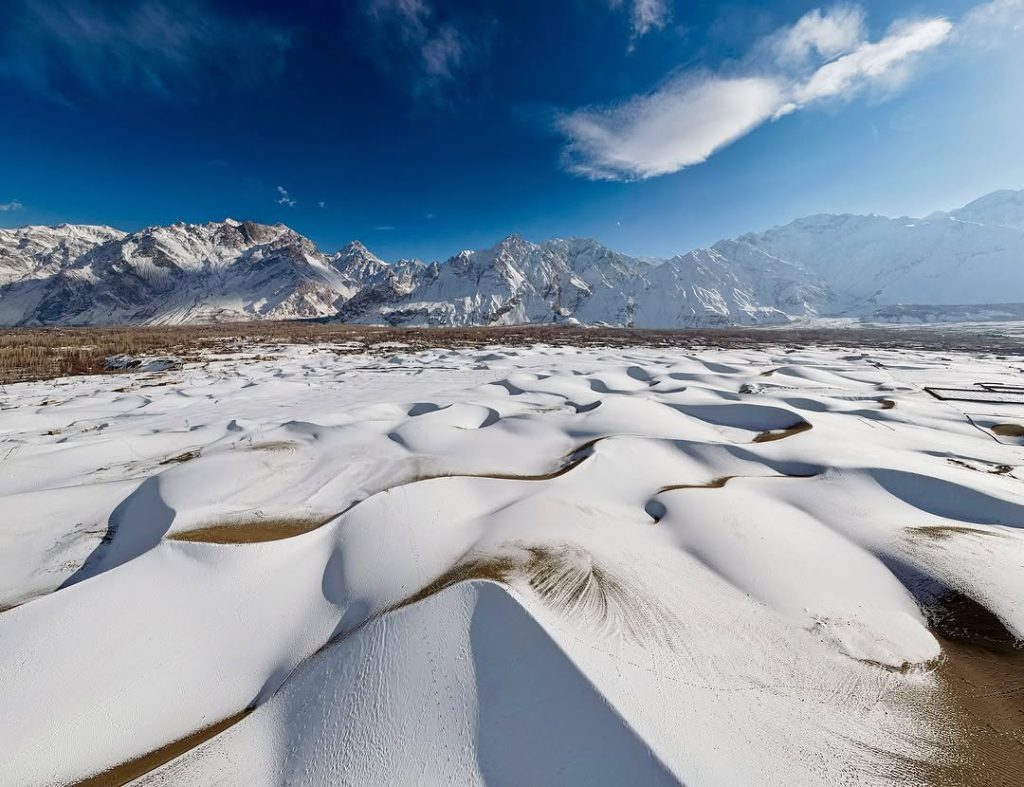
The highest desert in Pakistan is the Katpana Desert, also known as the Cold Desert. Located near Skardu in Gilgit-Baltistan, this desert sits at an altitude of approximately 2,226 meters (7,303 feet) above sea level, making it one of the highest deserts in the world.
The Katpana Desert is unique not only for its elevation but also for its cold climate, with temperatures dropping significantly during the winter months. This combination of high altitude and frigid temperatures sets the Katpana Desert apart from other deserts in Pakistan and around the globe.
The Katpana Desert offers a stunning landscape of snowy sand dunes and a serene environment, attracting many tourists who come to experience its beauty and the unique phenomenon of a cold desert.
The Katpana Desert: Short Introduction
Geographical Location and Extent
The Katpana Desert is situated at an elevation of approximately 2,226 meters (7,303 feet) above sea level, making it one of the highest deserts in the world. The desert is located near the town of Skardu in the Gilgit-Baltistan region, an area known for its stunning landscapes and majestic mountains. The Katpana Desert covers a relatively small area compared to other deserts but its high altitude and unique environment make it stand out significantly.
Climate and Weather Conditions
The Katpana Desert experiences a cold desert climate, in stark contrast to the typical hot and arid desert environments found elsewhere. Winters are harsh, with temperatures dropping as low as -25°C (-13°F), while summer temperatures are mild, rarely exceeding 30°C (86°F). The desert receives minimal rainfall, but snowfall during the winter transforms the landscape into a picturesque snow-covered desert. This unique climate makes the Katpana Desert an extraordinary natural feature.
Flora and Fauna
Despite the extreme cold and arid conditions, the Katpana Desert supports a variety of flora and fauna adapted to its unique environment. Vegetation includes hardy shrubs, grasses, and small trees that can survive the cold climate and limited water supply. These plants not only add to the desert’s beauty but also provide essential resources for the ecosystem.
The fauna in the Katpana Desert includes species like the snow leopard, ibex, and various birds such as the Himalayan snowcock and golden eagle. These animals have adapted to the harsh conditions, showcasing the biodiversity that thrives in this high-altitude, cold desert setting.
Historical and Cultural Significance
The Katpana Desert holds significant historical and cultural importance for the local communities. The region has been part of ancient trade routes, including the famed Silk Road, which connected different parts of Asia and facilitated cultural and economic exchanges. These historical trade routes have left an indelible mark on the cultural practices and traditions of the area.
Culturally, the people living in and around the Katpana Desert have developed unique traditions that reflect their resilience and adaptation to the harsh environment. Local festivals, music, and crafts are distinctly influenced by the desert landscape and the challenges of living in such an extreme climate. These cultural practices add to the rich heritage of the Katpana Desert.
Economic Activities
The economy of the Katpana Desert region is primarily based on traditional forms of livelihood, such as livestock farming and agriculture. Residents raise yaks, goats, and sheep, animals well-adapted to the cold desert environment. These livestock provide essential resources, including milk, meat, and wool, which are vital to the local economy.
In recent years, tourism has emerged as a crucial economic activity in the Katpana Desert. The desert’s unique climate and scenic beauty attract many visitors interested in experiencing its distinct landscape. Activities such as jeep safaris, camping, and stargazing are popular among tourists, bringing economic benefits to the local communities and promoting sustainable tourism.
Tourism and Attractions
The Katpana Desert is a fascinating destination for tourists, offering a unique blend of natural beauty and adventure. Its high-altitude and snowy dunes provide an extraordinary experience, unlike any other desert. Tourists can explore the stunning landscape through jeep safaris, offering an exciting journey across the sandy terrain.
Camping in the Katpana Desert is a popular activity, with many visitors setting up tents to enjoy the serene environment and clear night skies. The desert’s remote location and lack of light pollution make it ideal for stargazing, where one can witness a breathtaking display of stars and the Milky Way.
One of the highlights of visiting the Katpana Desert is the chance to experience local culture and hospitality. Traditional music and dance performances by local residents add to the desert’s charm, providing a glimpse into the rich cultural heritage of the region.
The Katpana Desert, holding the title of the highest desert in Pakistan, is a testament to the country’s diverse and captivating landscapes. Its unique cold climate, geographical features, and cultural significance make it a must-visit destination for adventure seekers and nature enthusiasts alike. From its stunning snowy dunes to its rich cultural traditions, the Katpana Desert offers an unparalleled experience that leaves a lasting impression on all who visit. This incredible desert continues to be a cherished part of Pakistan’s natural heritage.
Sources: To ensure the accuracy and authenticity of the information provided, the following sources were referenced:
- Katpana Cold Desert – Pakistan Tourism Development Corporation PTDC
- Climate of Katpana Desert – Pakistan Meteorological Department PMD
- Wildlife of Cold Deserts – World Wildlife Fund