

Excerpt: This post answers the questions “What is the national mausoleum of Pakistan? What is Pakistan’s national mausoleum? Which is the national mausoleum of Pakistan? Where is the national mausoleum of Pakistan?”
Historical landmarks and monuments play a vital role in preserving a nation’s heritage and honoring its great leaders. These structures are symbols of national pride, reflecting the rich history and culture of a country. In this blog post, we will explore the national mausoleum of Pakistan, examining its history, architectural significance, and the role it plays in the nation’s collective memory.
What is the national mausoleum of Pakistan?
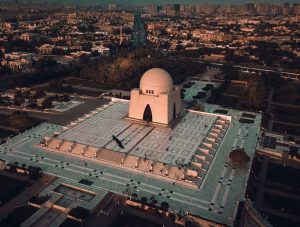
The national mausoleum of Pakistan is the Mazar-e-Quaid, also known as the Quaid-e-Azam Mausoleum. This grand monument is dedicated to Muhammad Ali Jinnah, the founder of Pakistan, who is affectionately known as Quaid-e-Azam, meaning “Great Leader.” The Mazar-e-Quaid is located in Karachi, the largest city of Pakistan, and serves as a symbol of respect and homage to Jinnah’s monumental contributions to the country’s independence.
History of Mazar-e-Quaid
The history of Mazar-e-Quaid dates back to the time of Pakistan’s independence. After the country was established in 1947, there was a strong desire among the people to honor Muhammad Ali Jinnah, the visionary leader who played a pivotal role in the creation of Pakistan. Jinnah passed away on September 11, 1948, and it was decided that a mausoleum would be built to commemorate his legacy.

The construction of Mazar-e-Quaid began in 1960 under the direction of renowned Pakistani architect Yahya Merchant. The design was inspired by modernist principles, with a focus on simplicity, elegance, and grandeur. The mausoleum was completed in 1970, and it has since become one of Pakistan’s most iconic landmarks.
Architectural Significance
Mazar-e-Quaid is an architectural marvel that combines modernist design with traditional elements. The mausoleum is built from white marble, giving it a pristine and timeless appearance. The structure stands on a raised platform, surrounded by lush green gardens and walkways, which enhance its grandeur and serenity.
The central dome of the mausoleum is the most striking feature, rising to a height of approximately 43 meters (141 feet). The dome is supported by four arched entrances, each adorned with intricate marble latticework. The simplicity and symmetry of the design create a sense of balance and harmony, reflecting the ideals of unity and stability that Jinnah envisioned for Pakistan.
Inside the mausoleum, the sarcophagus of Muhammad Ali Jinnah is placed at the center of the chamber, draped in the national flag of Pakistan. The walls of the chamber are adorned with inscriptions from the Quran, adding a spiritual and reverential atmosphere to the space. The mausoleum also houses the graves of Liaquat Ali Khan, Pakistan’s first Prime Minister, and other prominent figures who played significant roles in the country’s history.
Cultural and National Significance
Mazar-e-Quaid holds immense cultural and national significance for the people of Pakistan. It is not just a final resting place for the country’s founding father but also a symbol of the nation’s unity, resilience, and aspirations. The mausoleum serves as a reminder of the values and principles that Muhammad Ali Jinnah stood for, such as democracy, justice, and equality.
The mausoleum is a place of pilgrimage for Pakistanis from all walks of life. People visit Mazar-e-Quaid to pay their respects to Jinnah and to reflect on his enduring legacy. The site is particularly busy on national holidays, such as Pakistan Day (March 23) and Independence Day (August 14), when special ceremonies and events are held to commemorate Jinnah’s contributions to the nation.
Mazar-e-Quaid is also a popular destination for tourists and school groups, who come to learn about Pakistan’s history and to gain inspiration from the life and achievements of Quaid-e-Azam. The mausoleum’s gardens and surrounding areas provide a peaceful and contemplative environment, making it an ideal place for reflection and remembrance.
Preservation and Maintenance
The preservation and maintenance of Mazar-e-Quaid are of utmost importance to ensure that this national treasure remains intact for future generations. The mausoleum is managed by the Quaid-e-Azam Mazar Management Board, which oversees its upkeep and organizes various events and activities to promote public awareness about its significance.
Regular maintenance work is carried out to preserve the structural integrity and aesthetic appeal of the mausoleum. This includes cleaning and restoring the marble surfaces, maintaining the gardens, and ensuring that the inscriptions and decorative elements remain in good condition. The management board also collaborates with heritage conservation experts to implement best practices in preserving the mausoleum’s historical and architectural value.
In conclusion, Mazar-e-Quaid, the national mausoleum of Pakistan, stands as a symbol of the nation’s pride, unity, and reverence for its founding father, Muhammad Ali Jinnah. This architectural masterpiece, with its elegant design and serene surroundings, serves as a place of reflection and inspiration for Pakistanis and visitors alike. The mausoleum’s cultural and historical significance is a testament to Jinnah’s enduring legacy and his vision for a prosperous and united Pakistan. By preserving and honoring Mazar-e-Quaid, the people of Pakistan continue to pay tribute to the great leader who shaped the destiny of their nation.
Source: To ensure the accuracy and authenticity of the information provided, the following sources were referenced:
- National Symbols of Pakistan – Wikipedia

