

Excerpt: This post answers the questions “What is the difference between a dam and a barrage? How to differentiate between a dam and a barrage? “
Water management structures are essential for the development and sustainability of any region. Two of the most commonly used structures for managing water flow and resources are dams and barrages. While both play significant roles in water conservation and management, they have distinct functions, designs, and purposes. This blog post aims to clarify the differences between a dam and a barrage in simple and easy-to-understand terms.
What is the Difference Between a Dam and a Barrage?
Dams and barrages are both barriers built across rivers or streams, but they serve different purposes and have different designs. Here are the key differences:
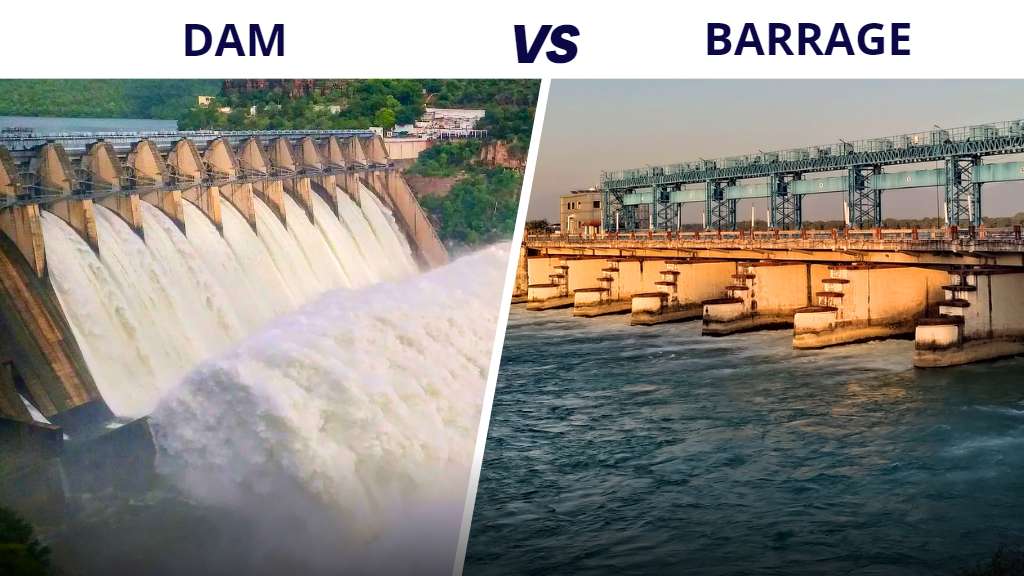
1. Purpose and Function
Dams:
- Primary Purpose: The primary purpose of a dam is to store water. Dams create large reservoirs that can hold significant quantities of water, which can be used for various purposes such as irrigation, drinking water supply, hydroelectric power generation, and flood control.
- Water Storage: Dams are designed to store water for extended periods. The water stored in the reservoir can be released gradually to meet the needs of downstream areas.
- Power Generation: Many dams are equipped with hydroelectric power plants that generate electricity by utilizing the potential energy of stored water.
Barrages:
- Primary Purpose: The primary purpose of a barrage is to divert water. Barrages are constructed to raise the water level in a river so that it can be directed into canals for irrigation or other uses.
- Water Diversion: Barrages do not store water; instead, they control and regulate the flow of water to ensure a consistent supply to irrigation canals and other water systems.
- Irrigation: Barrages are primarily used for irrigation purposes, ensuring that agricultural lands receive a reliable water supply.
2. Structural Design
Dams:
- Height and Structure: Dams are typically massive structures built with considerable height to create large reservoirs. They are usually made of concrete, earth, or rock-fill materials.
- Reservoir Creation: The height and structure of a dam allow it to create a significant reservoir behind it, storing vast amounts of water.
- Gates and Spillways: Dams are equipped with gates and spillways to control the release of water from the reservoir. Spillways are designed to release excess water during periods of heavy rainfall to prevent flooding.
Barrages:
- Height and Structure: Barrages are relatively low structures compared to dams. They are constructed across wide sections of rivers and usually consist of a series of gates or sluices.
- No Reservoir Creation: Unlike dams, barrages do not create large reservoirs. They only raise the water level temporarily to facilitate diversion into canals.
- Gates and Sluices: Barrages are equipped with numerous gates and sluices that can be opened or closed to regulate water flow. These gates help maintain a consistent water level for diversion into irrigation canals.
3. Examples of Dams and Barrages
Examples of Dams:
- Tarbela Dam: Located on the Indus River in Pakistan, Tarbela Dam is one of the largest earth-filled dams in the world. It serves multiple purposes, including water storage, irrigation, and hydroelectric power generation.
- Hoover Dam: Situated on the Colorado River in the United States, Hoover Dam is a concrete arch-gravity dam known for its massive size and hydroelectric power generation capacity.
Examples of Barrages:
- Sukkur Barrage: Located on the Indus River in Pakistan, Sukkur Barrage is a significant structure used to divert water into irrigation canals, supporting agriculture in the Sindh region.
- Farakka Barrage: Situated on the Ganges River in India, Farakka Barrage is used to divert water for irrigation and maintain navigable water levels in the river.
Dams and Barrages
Dams:
- Water Storage and Supply: Dams store water during periods of surplus and release it during dry periods, ensuring a consistent water supply for various uses. They are crucial for managing water resources, especially in regions prone to droughts.
- Hydroelectric Power Generation: The potential energy of stored water is converted into electricity by passing it through turbines in hydroelectric power plants. This renewable energy source is environmentally friendly and contributes to the national grid.
- Flood Control: Dams help control floods by regulating the flow of water. During heavy rainfall, excess water can be stored in the reservoir, reducing the risk of downstream flooding.
Barrages:
- Irrigation and Agriculture: Barrages play a vital role in irrigating agricultural lands. By diverting water into canals, they ensure that crops receive adequate water for growth, supporting food security and livelihoods.
- Water Level Management: Barrages maintain a consistent water level in rivers, facilitating navigation and transportation. They also help prevent saltwater intrusion in coastal areas by keeping the water level high.
- Flow Regulation: Barrages regulate the flow of water to prevent sudden surges or shortages. This consistent flow is essential for maintaining ecological balance and supporting aquatic life.
In conclusion, while both dams and barrages are essential structures for water management, they serve different purposes and have distinct designs. Dams are primarily built for water storage, hydroelectric power generation, and flood control, while barrages are designed to divert water for irrigation and maintain water levels. Understanding the differences between these two structures is crucial for appreciating their roles in sustaining agriculture, supporting energy needs, and managing water resources effectively.

