
Excerpt: This post answers the questions “Why Nanga Parbat is called Killer Mountain? Which is the Killer Mountain of Pakistan? Which is the killer peak of Pakistan?”
Nestled within the world’s grandest mountain ranges lies a peak that has earned a fearsome reputation. Its striking beauty belies the treacherous challenges it poses to climbers. This mountain, though less famous than some of its neighbors, holds a deadly allure that has captivated and, unfortunately, claimed the lives of many adventurers. In this blog post, we explore why this formidable giant is often referred to by a name that evokes both respect and dread.
Why Nanga Parbat is called Killer Mountain?
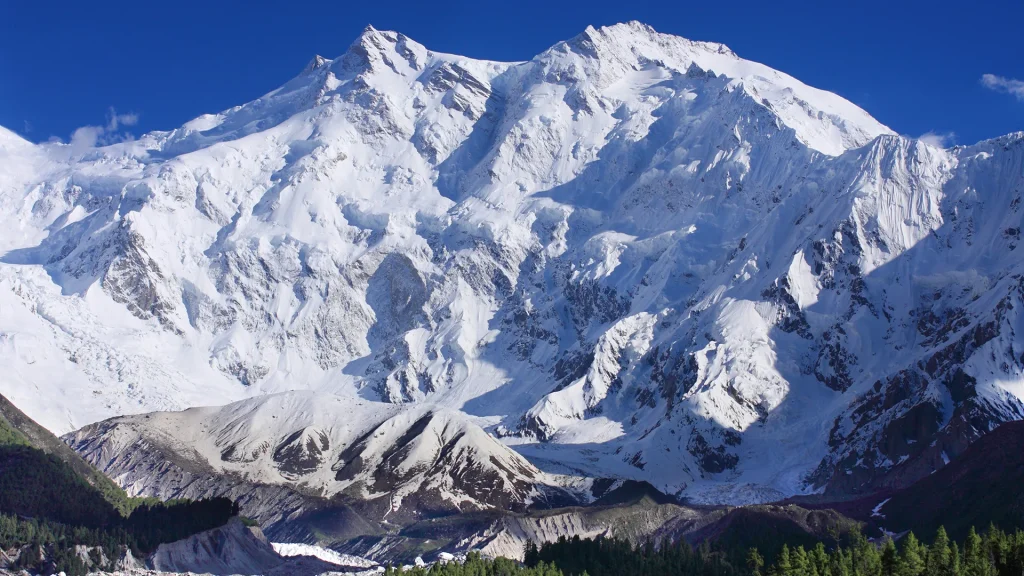
Nanga Parbat, standing tall at 8,126 meters (26,660 feet) in the Himalayas, is known as the “Killer Mountain.” This moniker isn’t given lightly; it stems from the perilous conditions and numerous fatalities that have occurred on its slopes. The name “Nanga Parbat” means “Naked Mountain” in Sanskrit, reflecting its sheer, ice-free rock faces.
- Harsh Weather Conditions: The weather on Nanga Parbat is notoriously unpredictable and severe. Climbers face extreme cold, violent storms, and sudden avalanches. These harsh conditions can change rapidly, turning a manageable climb into a life-threatening ordeal.
- Technical Climbing Challenges: Nanga Parbat’s routes are some of the most technically demanding in the mountaineering world. Climbers must navigate steep, icy, and unstable terrain, requiring advanced skills and experience. The ascent often involves treacherous ice walls and crevasses that can prove fatal if misjudged.
- High Fatality Rate: Historically, Nanga Parbat has one of the highest fatality rates among the world’s 8,000-meter peaks. In the early attempts to conquer it, many climbers perished, leading to its fearsome reputation. Despite modern advancements in equipment and technique, the mountain still poses significant risks.
- Psychological Strain: The mental challenges of climbing Nanga Parbat are as daunting as the physical ones. The isolation, the high altitude, and the constant danger can wear down even the most seasoned climbers. The psychological strain can lead to poor decision-making and increased risk.
Which is the Killer Mountain/Peak of Pakistan?
Nanga Parbat holds the title of the “Killer Mountain” in Pakistan. It is the ninth-highest mountain in the world and the second-highest in Pakistan, after K2. Its fearsome reputation has made it a focal point in the history of mountaineering.
The mountain’s tragic allure continues to attract climbers from around the globe, each hoping to conquer its formidable challenges and survive its deadly beauty. Despite the risks, Nanga Parbat remains a symbol of both the danger and the allure of high-altitude mountaineering.
In conclusion, Nanga Parbat is called the “Killer Mountain” due to its deadly combination of harsh weather, technical difficulty, high fatality rate, and psychological challenges. This peak, towering in the Himalayas, commands respect and caution from all who dare to approach it. Its legacy as a formidable and dangerous climb endures, reminding us of the immense power and unpredictability of nature.

