
Excerpt: This post answers the questions “Who built the Sukkur Bridge? Who designed the famous Sukkur Bridge? Who was the architect of the Sukkur Bridge?”
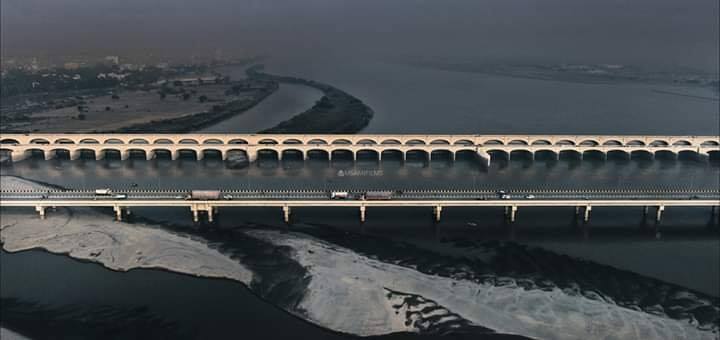
The Sukkur Bridge, also known as the Lansdowne Bridge, stands as one of the most remarkable engineering achievements of the 19th century in the Indian subcontinent. Located in the city of Sukkur, Sindh, this iconic bridge spans the mighty Indus River, connecting the cities of Sukkur and Rohri. The bridge is not only an essential part of Pakistan’s transportation network but also a symbol of the country’s rich historical and architectural heritage. Understanding who built this magnificent structure allows us to appreciate the ingenuity and skill that went into its construction.
Who Built the Sukkur Bridge?
The Sukkur Bridge, or Lansdowne Bridge, was designed by the renowned British civil engineer Sir Alexander Meadows Rendel. Rendel was a prominent figure in the field of civil engineering during the 19th century, with numerous notable projects to his name. He was responsible for the design of several bridges, docks, and railways across the British Empire. The girder work for the Sukkur Bridge was manufactured in London by the engineering firm Westwood, Baillie, and Co. The bridge’s erection was carried out by F.E. Robertson and Hecquet, skilled engineers who ensured that the construction was executed flawlessly.
The bridge was named after Lord Lansdowne, the Viceroy of India at the time of its completion. The construction of the Sukkur Bridge began in 1887 and was completed in 1889. The bridge was officially inaugurated on March 25, 1889, and since then, it has stood as a testament to the engineering prowess of its creators.
Who Was Lansdowne?
Lord Lansdowne, whose full name was Henry Charles Keith Petty-Fitzmaurice, the 5th Marquess of Lansdowne, served as the Viceroy of India from 1888 to 1894. He was a British statesman who held various important positions during his career, including Governor General of Canada and Secretary of State for War. Lansdowne was known for his diplomatic skills and his efforts to strengthen the British Empire’s influence in India and other colonies.
As Viceroy of India, Lansdowne was instrumental in overseeing several significant infrastructure projects, including the construction of the Sukkur Bridge. His tenure was marked by efforts to modernize India’s transportation and communication networks, which were crucial for the economic development of the region. The naming of the Sukkur Bridge after him was a tribute to his contributions to the Indian subcontinent’s development.
The Engineering Marvel of Sukkur Bridge
The Sukkur Bridge is an engineering marvel that showcases the ingenuity and innovation of its designers and builders. The bridge spans a total length of 820 feet (250 meters) and was one of the longest cantilever bridges in the world at the time of its completion. The bridge’s design incorporates two main cantilever arms that extend from either side of the river, with a central suspended span connecting them.
The construction of the Sukkur Bridge was a challenging and complex task, requiring meticulous planning and precision. The engineers had to consider various factors, including the river’s flow, the local climate, and the availability of materials. The bridge was constructed using steel girders, which were manufactured in London and transported to Sukkur for assembly. The erection process involved the use of temporary structures and cranes to position the girders accurately.
The completion of the Sukkur Bridge was a significant milestone in the development of Pakistan’s transportation infrastructure. The bridge facilitated the movement of goods and people across the Indus River, boosting trade and commerce in the region. It also played a vital role in connecting different parts of the country, contributing to the overall economic growth of Pakistan.
The Sukkur Bridge, or Lansdowne Bridge, remains an iconic symbol of engineering excellence and historical significance in Pakistan. Built by the visionary Sir Alexander Meadows Rendel and named after the influential Viceroy Lord Lansdowne, the bridge represents the confluence of engineering brilliance and colonial history. Its construction was a remarkable achievement that showcased the capabilities of 19th-century engineering and left a lasting legacy for future generations. Today, the Sukkur Bridge continues to serve as a vital transportation link and a reminder of the incredible feats of human ingenuity and determination.
Source: To ensure the accuracy and authenticity of the information provided, the following sources were referenced:
- Henry Charles Keith Petty-Fitzmaurice – Wikipedia
- Lansdowne Bridge – Wikipedia
- Sukkur Barrage – Sindh Irrigation Department