Excerpt: This post answers the questions “Where do three mountain ranges meet in Pakistan? What is the name of the place where three mountain ranges meet in Pakistan?”
Pakistan is known for its diverse and breathtaking landscapes, which include soaring mountain ranges, vast plains, and expansive deserts. Among its many natural wonders, one of the most remarkable features is the convergence of three major mountain ranges within the country’s borders. This unique geographical location is a point of great interest for geologists, travelers, and nature enthusiasts alike. In this blog post, we will explore where these three mountain ranges meet in Pakistan and take a closer look at the significance of this confluence.
Where do three mountain ranges meet in Pakistan?
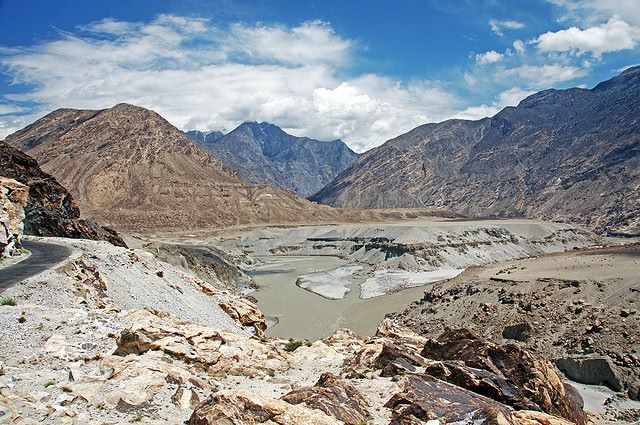
The three mountain ranges that converge in Pakistan are the Himalayas, the Karakoram Range, and the Hindu Kush. This unique meeting point occurs near the town of Juglot, which is situated 45 km south east of Gilgit on the Karakoram Highway. This point is often referred to as the “junction point of three mighty mountain ranges.” This confluence is a testament to the incredible geological diversity of Pakistan and offers a stunning visual spectacle for those who visit the area.
The Himalayas, Karakoram, and Hindu Kush
The Himalayas
The Himalayas are one of the most famous mountain ranges in the world, stretching across five countries: India, Nepal, Bhutan, China, and Pakistan. In Pakistan, the westernmost extension of the Himalayas can be found in the Gilgit-Baltistan region. The Himalayas are known for their towering peaks, deep valleys, and diverse ecosystems. This range is home to some of the highest mountains in the world, including Nanga Parbat, which stands at an elevation of 8,126 meters and is the ninth-highest mountain globally.
The Karakoram Range
The Karakoram Range is one of the most rugged and dramatic mountain ranges on Earth. It stretches across Pakistan, India, and China, with its most significant portion lying in Pakistan’s Gilgit-Baltistan region. The Karakoram Range is home to some of the world’s highest peaks, including K2, the second-highest mountain in the world at 8,611 meters. The range is also known for its extensive glaciation, with some of the largest glaciers outside the polar regions, such as the Baltoro Glacier and the Siachen Glacier.
The Hindu Kush
The Hindu Kush is a mountain range that stretches across Afghanistan and northern Pakistan. In Pakistan, the eastern extension of the Hindu Kush can be found in the Khyber Pakhtunkhwa and Gilgit-Baltistan regions. This range is characterized by its rugged terrain, steep valleys, and high peaks. The highest peak in the Hindu Kush range is Tirich Mir, which stands at an elevation of 7,708 meters. The Hindu Kush has historically served as a significant cultural and trade route, connecting Central Asia with South Asia.
Juglot, Pakistan
Location and Geography
Jaglot is a small town located in the Gilgit district of Gilgit-Baltistan, Pakistan. It is situated at the confluence of the Indus River and the Gilgit River, making it a key strategic location in the region. The town of Jaglot is not only significant for its geographical location but also for its role as a transportation hub, connecting the Karakoram Highway with the Skardu Road.
The Junction Point
The exact point where the three mountain ranges meet is located near the town of Jaglot. This confluence is marked by a signboard that identifies the junction of the Himalayas, the Karakoram Range, and the Hindu Kush. The area offers stunning panoramic views of the surrounding mountains and serves as a popular stop for travelers and tourists exploring the region.
Historical and Cultural Significance
Jaglot and the surrounding regions have a rich history and cultural heritage. The area has been a crossroads for various civilizations, traders, and explorers for centuries. The Silk Road, an ancient trade route that connected the East with the West, passed through this region, leaving behind a legacy of cultural exchange and historical landmarks.
The local communities in Jaglot and Gilgit-Baltistan have unique traditions, languages, and customs that reflect the diverse influences of the region. The cultural heritage of the area is celebrated through various festivals, music, and crafts, which continue to thrive in these remote mountain communities.
Tourism and Adventure
The town of Jaglot and the surrounding regions are a haven for adventure enthusiasts and nature lovers. The convergence of the three mountain ranges offers numerous opportunities for trekking, mountaineering, and sightseeing. The Karakoram Highway, one of the highest paved international roads in the world, passes through Jaglot, providing access to some of the most breathtaking landscapes in Pakistan.
Tourists visiting Jaglot can explore nearby attractions such as Fairy Meadows, a picturesque meadow with stunning views of Nanga Parbat, and the Hunza Valley, known for its scenic beauty and vibrant culture. The region’s natural beauty and unique geographical features make it a must-visit destination for anyone interested in exploring Pakistan’s mountainous terrain.
In conclusion, the convergence of the Himalayas, the Karakoram Range, and the Hindu Kush near Jaglot, Pakistan, is a geographical marvel that highlights the incredible diversity of the country’s landscape. This junction point is not only significant for its geological features but also for its historical, cultural, and tourism value. Understanding where these three mountain ranges meet allows us to appreciate the natural beauty and richness of Pakistan’s mountainous regions, making it a destination worth exploring for adventurers and nature enthusiasts alike.
Source: To ensure the accuracy and authenticity of the information provided, the following sources were referenced:
- Jaglot: Where the Himalayas, Karakoram and Hindukush meet – Times of India
- Jaglot – Wikipedia