
Excerpt: This post answers the questions “What is the national mountain of Pakistan? Which is Pakistan’s national mountain? Where is the national mountain of Pakistan? Which is the national peak of Pakistan?”
Mountains are majestic natural wonders that hold a special place in a nation’s landscape, history, and culture. They often symbolize strength, endurance, and the beauty of nature. In this blog post, we will explore the national mountain of Pakistan, delving into its history, geographical significance, and cultural importance. This mountain stands as a testament to the country’s natural beauty and its spirit of adventure.
What is the national mountain of Pakistan?
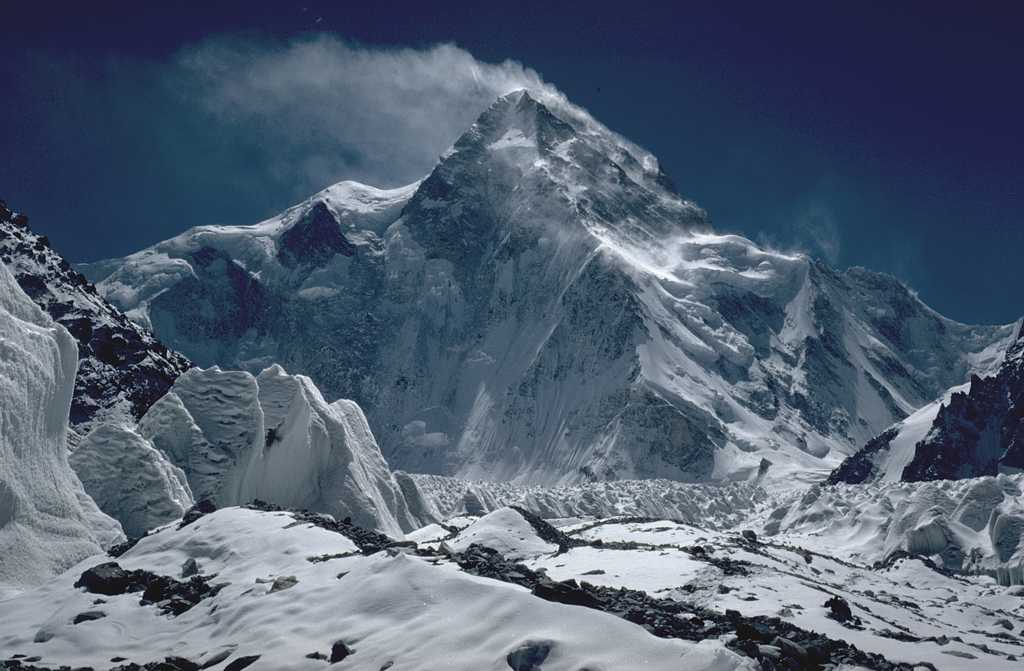
The national mountain of Pakistan is K2, also known as Mount Godwin-Austen. K2 is the second-highest mountain in the world, standing at an impressive height of 8,611 meters (28,251 feet) above sea level. Located in the Karakoram Range on the border between Pakistan and China, K2 is a symbol of Pakistan’s rugged beauty and adventurous spirit. It is also one of the most challenging and revered peaks for mountaineers from around the world.
Geographical Significance
K2 is part of the Karakoram Range, which is home to some of the highest and most dramatic peaks in the world. The Karakoram Range is situated in the Gilgit-Baltistan region of Pakistan, extending into the Xinjiang region of China. The range is known for its breathtaking scenery, with towering peaks, deep valleys, and vast glaciers.
K2 is located in the Baltoro Glacier region, one of the largest and most remote glaciers outside the polar regions. The mountain’s location in this rugged and isolated terrain adds to its allure and challenge. The Karakoram Range, including K2, is part of the larger Himalayan mountain system, which spans several countries in South Asia.
History and Exploration
The history of K2’s exploration is filled with tales of adventure, determination, and resilience. The mountain was first surveyed and named by the British surveyor Thomas Montgomerie in 1856. Montgomerie designated it as “K2” because it was the second peak in the Karakoram Range that he identified.
The first serious attempts to climb K2 began in the early 20th century. In 1902, a British expedition led by Oscar Eckenstein made the first recorded attempt to reach the summit. Despite their efforts, the team faced numerous challenges and was unable to achieve their goal.
In 1954, an Italian expedition led by Ardito Desio finally succeeded in reaching the summit of K2. On July 31, 1954, climbers Lino Lacedelli and Achille Compagnoni became the first people to stand on the summit of K2. Their successful ascent marked a significant milestone in the history of mountaineering and brought international attention to the formidable peak.
Challenges and Dangers
K2 is often referred to as the “Savage Mountain” due to its extreme difficulty and the high risk associated with climbing it. The mountain presents numerous challenges for climbers, including steep and icy slopes, unpredictable weather, and the risk of avalanches. The technical difficulty of the climb, combined with the harsh conditions, makes K2 one of the most challenging peaks in the world.
The mortality rate for climbers attempting to summit K2 is significantly higher than that of other major peaks, including Mount Everest. Many experienced mountaineers have lost their lives on K2, and successful ascents are few and far between. The mountain’s reputation as one of the most dangerous climbs in the world adds to its mystique and allure for adventurers.
Cultural and National Significance
K2 holds a special place in the hearts of Pakistanis and is a source of national pride. The mountain symbolizes the country’s rugged beauty, strength, and adventurous spirit. It is also a testament to the rich natural heritage of Pakistan and the awe-inspiring landscapes of the Karakoram Range.
The people of Gilgit-Baltistan, the region where K2 is located, have a deep cultural connection to the mountain. The local communities have lived in harmony with the harsh mountain environment for centuries, and their traditions and way of life are closely tied to the natural landscape.
K2 also plays a significant role in promoting tourism and adventure sports in Pakistan. The mountain attracts climbers, trekkers, and adventure enthusiasts from around the world, contributing to the local economy and raising international awareness about Pakistan’s natural beauty.
Conservation and Preservation
Preserving the natural beauty and ecological integrity of K2 and the surrounding Karakoram Range is of utmost importance. The region is home to diverse flora and fauna, including several endangered species. Conservation efforts are essential to protect this unique and fragile ecosystem.
Various organizations and government agencies in Pakistan are working to promote sustainable tourism and responsible mountaineering practices. These efforts include initiatives to reduce the environmental impact of expeditions, promote waste management, and educate climbers about the importance of preserving the natural environment.
In conclusion, K2, the national mountain of Pakistan, stands as a symbol of the country’s natural beauty, strength, and adventurous spirit. This majestic peak, with its towering height and challenging slopes, has captured the imagination of mountaineers and adventurers from around the world. The history, geographical significance, and cultural importance of K2 make it a cherished and revered landmark in Pakistan. By preserving and honoring K2, the people of Pakistan continue to celebrate their rich natural heritage and inspire future generations to embrace the spirit of adventure and exploration.
Source: To ensure the accuracy and authenticity of the information provided, the following sources were referenced:
- National Symbols of Pakistan – Wikipedia