
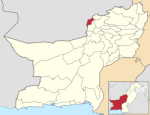
Excerpt: This post answers the questions “Is there any barrage in Balochistan? How many barrages are there in Balochistan Pakistan? Is there any barrage located in Balochistan?”
Balochistan, the largest province of Pakistan in terms of land area, is known for its arid climate and rugged terrain. Despite its vastness, the region faces significant challenges when it comes to water resources. Agriculture, which is a primary livelihood for many in Balochistan, heavily depends on the availability of water. In this blog post, we will discuss whether there are any barrages in Balochistan and how the province manages its water needs.
Is there any barrage in Balochistan?
No, there is no barrage located within the province of Balochistan. Instead, the province relies on the Guddu Barrage, which is situated in the Sindh province of Pakistan, for its irrigation needs. The Guddu Barrage plays a crucial role in supplying water to the Naseerabad District of Balochistan, ensuring that the agricultural activities in the region can be sustained.
Guddu Barrage
The Guddu Barrage is located on the Indus River in the Sindh province and serves as a vital infrastructure for water management. Constructed in 1962, the barrage is designed to control the flow of water, provide irrigation, and mitigate the impact of floods. It has a total length of 1,355 meters and consists of 64 gates, which help regulate the water flow.
The Guddu Barrage supplies water to a vast area, including parts of Sindh and Balochistan. The barrage channels water into several canals, including the Ghotki Feeder, Rainee Canal, and Begari Canal. These canals extend into Balochistan, providing much-needed water for irrigation in the Naseerabad District. This region, known for its agricultural productivity, relies heavily on the water supplied by the Guddu Barrage to cultivate crops such as wheat, rice, and vegetables.
Importance of Water Management in Balochistan
Water management is a critical issue in Balochistan due to its arid climate and limited rainfall. The province experiences long periods of drought, making it essential to have efficient water management systems in place. The reliance on the Guddu Barrage highlights the need for collaborative efforts between provinces to ensure that water resources are distributed equitably.
In addition to the Guddu Barrage, Balochistan also utilizes other water sources, such as rivers, dams, and underground water reservoirs. The province has several small dams, including the Mirani Dam, Shadi Kaur Dam, and Sabakzai Dam, which help store water for irrigation and domestic use. However, these dams have limited capacity and are not sufficient to meet the growing water demands of the province.
Challenges and Future Solutions
One of the significant challenges faced by Balochistan is the over-extraction of groundwater, which has led to a decline in water levels and increased salinity. This issue poses a threat to the sustainability of agriculture and the overall water security of the region. To address this challenge, there is a need for better water management practices, such as rainwater harvesting, efficient irrigation techniques, and the construction of more small dams and reservoirs.
Moreover, the development of new water infrastructure, such as barrages and canals, within Balochistan could help reduce the province’s dependence on external sources like the Guddu Barrage. Collaborative efforts between the federal and provincial governments, as well as international organizations, can play a crucial role in addressing the water scarcity issues in Balochistan.
While there is no barrage located within Balochistan, the province relies on the Guddu Barrage in Sindh for its irrigation needs. The water supplied by the Guddu Barrage is essential for sustaining agriculture in the Naseerabad District of Balochistan. The challenges of water scarcity and management in the province necessitate the development of efficient water management practices and infrastructure. By addressing these challenges, Balochistan can ensure a sustainable future for its agricultural sector and overall water security.
Source: To ensure the accuracy and authenticity of the information provided, the following sources were referenced:
- List of barrages and headworks in Pakistan – Wikipedia

