Excerpt: This post answers the questions “How old is Mardan? When was Mardan established? What is the history of Mardan?”
Located in the north-western region of Pakistan, a city stands as a testament to the rich history and cultural heritage of the area. This city has seen the rise and fall of empires, the flow of countless generations, and the evolution of society. Its age and history are significant not only to its residents but also to those who study the past to understand the present. This city, known for its vibrant culture and historical significance, has a fascinating story to tell.
How Old Is Mardan?
Mardan is a city with deep historical roots. It is believed that the region around Mardan has been inhabited for thousands of years, with evidence of ancient settlements dating back to the Gandhara civilization. The Gandhara civilization flourished around 1500 BCE to 500 CE, which suggests that Mardan has been inhabited for over 3,500 years.
Moreover the Sanghao Caves near Mardan have yielded artefacts from the Middle Paleolithic period, which are over 30,000 years old. Additionally, other sites in the area have provided evidence of human activity from the Upper Paleolithic period. These findings indicate that the region has been inhabited since the first and middle Stone Ages.
The city has seen various periods of development and decline, influenced by the many empires and rulers who have governed the area. From the ancient Gandhara civilization to the era of the Indo-Greek Kingdom, and later the rule of the Mauryan and Kushan empires, each period has left its mark on Mardan. The city has also witnessed the influence of the Mughal Empire and the British colonial period, all of which have contributed to its rich and diverse history.
When was Mardan established?
The History of Mardan
Ancient History and the Gandhara Civilization
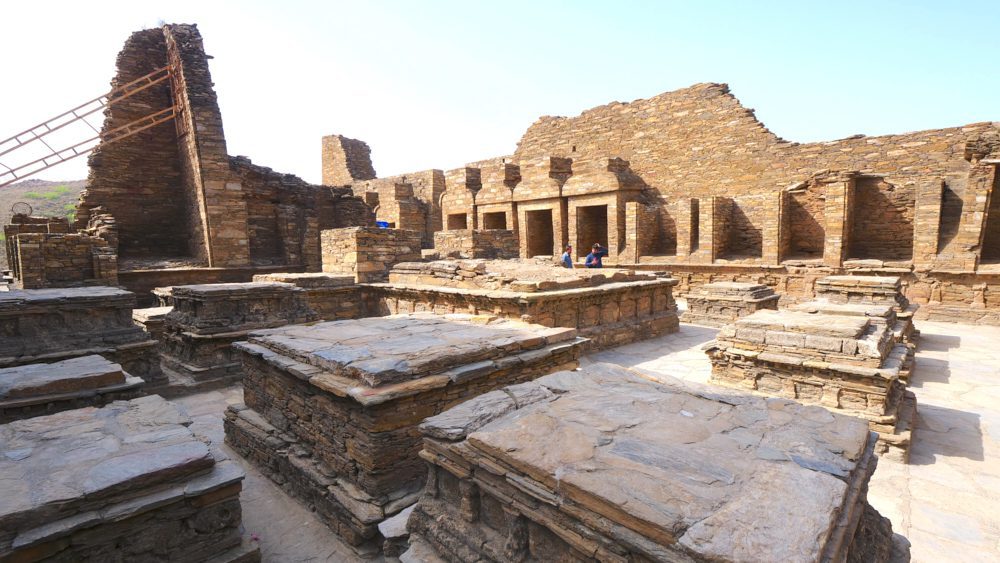
Mardan’s history can be traced back to the ancient Gandhara civilization, which existed in the region from around 1500 BCE to 500 CE. Gandhara was known for its advanced urban planning, art, and architecture. The region was a significant center of Buddhist culture, with numerous monasteries, stupas, and universities. The archaeological site of Takht-i-Bahi, located near Mardan, is a testament to the grandeur of the Gandhara civilization. This Buddhist monastic complex dates back to the 1st century CE and is a UNESCO World Heritage Site.
Indo-Greek and Mauryan Periods
After the decline of the Gandhara civilization, the region saw the arrival of the Indo-Greek Kingdom, which ruled from around 180 BCE to 10 CE. The Indo-Greek rulers were known for their syncretic culture, blending Greek and local traditions. The Mauryan Empire, under the leadership of Emperor Ashoka, also extended its influence to Mardan during the 3rd century BCE. Ashoka’s reign is marked by the spread of Buddhism, and several inscriptions and relics from this period have been found in the region.
The Kushan Empire
The Kushan Empire, which ruled from the 1st to the 3rd centuries CE, had a profound impact on Mardan. The Kushans were patrons of art and culture, and their rule saw the flourishing of Gandhara art. This period is known for the creation of iconic Buddhist statues and sculptures, many of which have been discovered in and around Mardan. The Kushan rulers also established trade routes, connecting the region to Central Asia and beyond.
The Islamic and Mughal Periods
With the advent of Islam in the 7th century CE, Mardan witnessed significant cultural and religious changes. The region became part of various Islamic empires, including the Ghaznavid and Ghurid dynasties. The Mughal Empire, which ruled from the 16th to the 18th centuries, also left its mark on Mardan. The Mughals were known for their architectural brilliance, and several Mughal-era structures can still be found in the city.
British Colonial Period
In the 19th century, Mardan came under British colonial rule. The British established military cantonments and administrative offices in the region. During this period, Mardan saw the development of modern infrastructure, including roads, railways, and educational institutions. The British influence can still be seen in the city’s architecture and urban planning.
Post-Independence Era
After the partition of India in 1947, Mardan became part of Pakistan. The city continued to grow and develop, becoming a significant urban center in the Khyber Pakhtunkhwa province. Today, Mardan is known for its vibrant culture, bustling markets, and educational institutions. The city’s history is a testament to the resilience and adaptability of its people, who have preserved their heritage while embracing modernity.
Mardan’s history is a rich tapestry woven with the threads of various civilizations, empires, and cultures. From the ancient Gandhara civilization to the modern era, the city has witnessed the ebb and flow of time, each period leaving its indelible mark. Understanding the history of Mardan not only provides insight into the city’s past but also offers a glimpse into the broader historical and cultural dynamics of the region. As Mardan continues to grow and evolve, its rich heritage remains a source of pride for its residents and a testament to the city’s enduring legacy.
Source: To ensure the accuracy and authenticity of the information provided, the following sources were referenced:
- Mardan District – Wikipedia
- Mardan – Britannica